pnf stretching pdf
Category : PDF
PNF Stretching PDF: A Comprehensive Guide
PNF stretching, detailed in downloadable PDF guides, utilizes neuromuscular techniques to enhance flexibility, originally for rehabilitation, now popular in fitness and sports.
What is PNF Stretching?
PNF stretching, or Proprioceptive Neuromuscular Facilitation, represents a sophisticated stretching method that uniquely blends passive stretching with isometric muscle contractions. This technique is designed to significantly improve range of motion (ROM) and overall flexibility. Initially developed as a rehabilitation tool, particularly to assist individuals in regaining movement post-injury or surgery, PNF has gained widespread acceptance within athletic training and general fitness regimes.
The core principle revolves around leveraging the body’s neuromuscular reflexes to achieve greater flexibility gains. Therapists frequently employ PNF to enhance both passive range of motion (PROM) and active range of motion (AROM). Detailed PDF guides often illustrate how these contractions and stretches work synergistically, offering a comprehensive understanding of the process.
The Core Principles of PNF Stretching
PNF stretching fundamentally operates on the principles of stimulating neuromuscular responses to facilitate increased flexibility. These responses include autogenic and reciprocal inhibition. Autogenic inhibition involves activating the Golgi tendon organs, causing muscle relaxation during sustained contraction. Reciprocal inhibition utilizes the opposing muscle group to assist in stretching, leveraging the nervous system’s natural responses.
PDF guides emphasize the importance of controlled contractions and precise positioning. The technique isn’t simply about forcing a stretch; it’s about engaging the nervous system to allow a greater range of motion. Understanding these principles, often detailed in instructional PDFs, is crucial for safe and effective application, maximizing benefits and minimizing risk of injury.
History and Development of PNF Techniques
PNF stretching originated in the 1940s, developed by physical therapists Herman Kabat and Margaret Knott, initially to treat patients with neurological conditions like polio and cerebral palsy. Their work focused on utilizing muscle contractions to restore function and improve movement patterns. Early PNF techniques were complex, requiring specialized training and understanding of neuromuscular physiology.
Over time, simplified versions emerged, becoming popular in sports medicine and fitness. Many PDF resources now detail these adapted techniques. The evolution reflects a shift from purely rehabilitative use to performance enhancement. PDF guides often trace this history, highlighting how understanding the original principles informs modern applications, ensuring effective and safe stretching practices.

Types of PNF Stretching Techniques
PNF techniques, often detailed in PDF guides, include Hold-Relax, Contract-Relax, Hold-Relax with Agonist Contraction, and Rhythmic Stabilization for flexibility gains.
Hold-Relax Technique
Hold-Relax, frequently illustrated in PNF stretching PDF guides, is a foundational technique. It begins with a passive stretch to the target muscle, held for approximately 20-30 seconds, bringing it to its barrier.
Next, the individual isometrically contracts the stretched muscle against an immovable resistance – often a partner or stable object – for 5-7 seconds. Crucially, there’s no joint movement during this contraction.
Following the contraction, the muscle is relaxed, and then a new passive stretch is applied, aiming to move beyond the original range of motion. This leverages the post-contraction relaxation to achieve greater flexibility. PDF resources emphasize repeating this process 2-3 times for optimal results, enhancing neuromuscular efficiency.
Contract-Relax Technique
Contract-Relax, a core method detailed in many PNF stretching PDF resources, differs slightly from Hold-Relax. It also starts with a passive stretch, bringing the muscle to its limit and holding it. However, instead of an isometric contraction against an immovable force, this technique involves a concentric contraction.
The individual actively contracts the muscle through a limited range of motion, typically resisted by a partner. This contraction lasts around 5-7 seconds. Following the contraction, the muscle is relaxed, and a new passive stretch is applied, aiming to surpass the previous range.
PDF guides highlight that this technique utilizes reciprocal inhibition, where contraction of the target muscle causes relaxation of its antagonist. Repeating this cycle 2-3 times maximizes flexibility gains and neuromuscular control.
Hold-Relax with Agonist Contraction
Hold-Relax with Agonist Contraction, often detailed in advanced PNF stretching PDF guides, builds upon the Hold-Relax technique for enhanced results. It begins similarly – a passive stretch to the muscle’s limit, followed by an isometric contraction against resistance for 5-7 seconds.
However, the key difference lies in the subsequent step. After relaxing the target muscle, instead of another passive stretch, the agonist muscle (the muscle opposing the stretched muscle) is actively contracted. This pulls the limb further into the stretch.
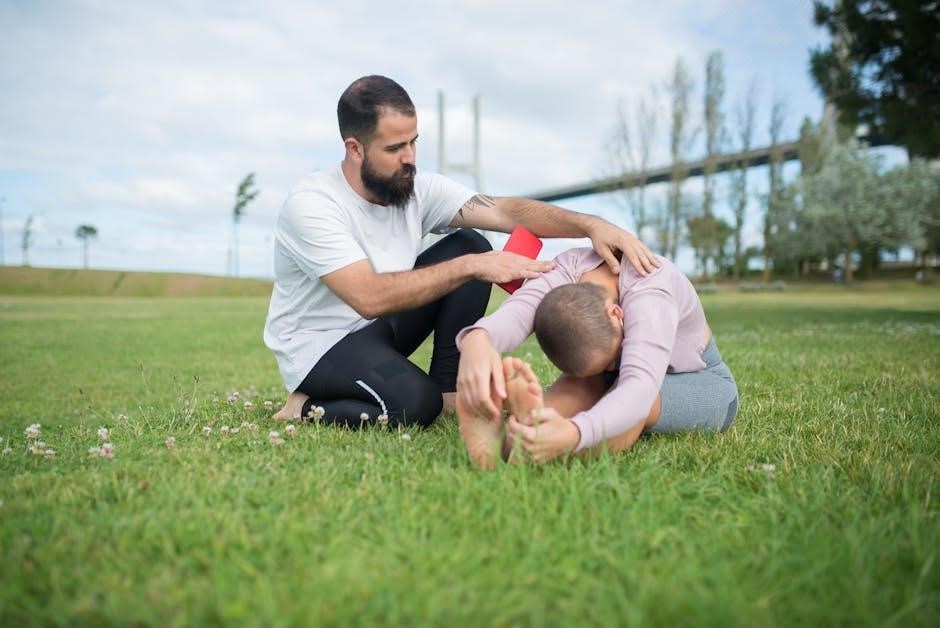
PDF resources emphasize this utilizes autogenic and reciprocal inhibition, deepening the stretch. This technique is particularly effective for increasing range of motion and is often recommended for athletes seeking peak performance.
Rhythmic Stabilization
Rhythmic Stabilization, a PNF technique often explained in comprehensive stretching PDF guides, differs significantly from other methods. It focuses on establishing a comfortable range of motion and improving muscle control, rather than aggressively increasing flexibility.
This involves a slow, rhythmic alternating contraction and relaxation of agonist and antagonist muscle groups. The partner provides resistance matching the patient’s effort, creating a cyclical pattern. PDF resources highlight the importance of controlled movements and patient comfort.
It’s particularly useful for individuals with neurological conditions or those recovering from injury, aiming to improve coordination and proprioception. Unlike other PNF techniques, it doesn’t typically involve holding stretches at their end range.
Benefits of PNF Stretching
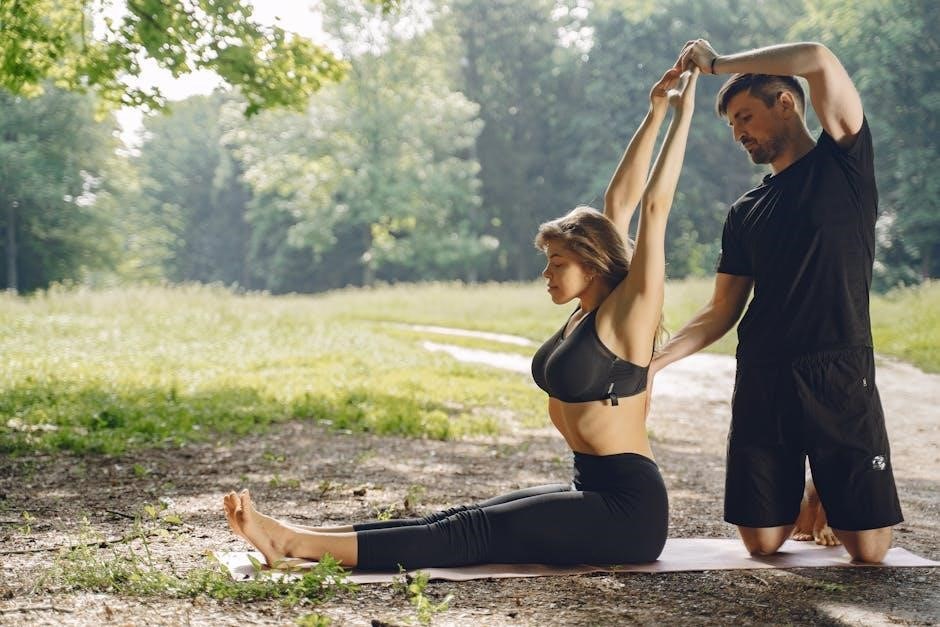
PNF stretching, as detailed in PDF guides, increases range of motion, improves muscle flexibility, enhances athletic performance, and aids rehabilitation effectively.
Increased Range of Motion
PNF stretching, comprehensively explained in available PDF resources, is particularly effective at increasing range of motion due to its unique neuromuscular approach. Unlike static stretching, PNF incorporates muscle contractions followed by relaxation, allowing for a greater stretch.
These PDF guides demonstrate how PNF techniques leverage the body’s natural reflexes – specifically, the Golgi tendon organ and muscle spindle – to inhibit muscle resistance. This inhibition allows the muscle to lengthen beyond its typical limits.
The techniques detailed in these guides, such as hold-relax and contract-relax, actively engage the muscles, promoting a more significant and lasting improvement in joint flexibility. This is beneficial for athletes, individuals recovering from injury, and anyone seeking to optimize their physical capabilities, as outlined in many PNF stretching PDFs.
Improved Muscle Flexibility
PNF stretching PDF guides emphasize that this technique goes beyond simply lengthening muscles; it fundamentally improves muscle flexibility by addressing neuromuscular factors. The combination of passive stretching and isometric contractions, detailed within these resources, allows for a deeper and more effective stretch than static methods alone.
These guides explain how PNF reduces muscle guarding, the natural tendency of muscles to resist stretching. By activating and then relaxing the muscle, PNF resets the muscle’s length-tension relationship, increasing its capacity to stretch further.
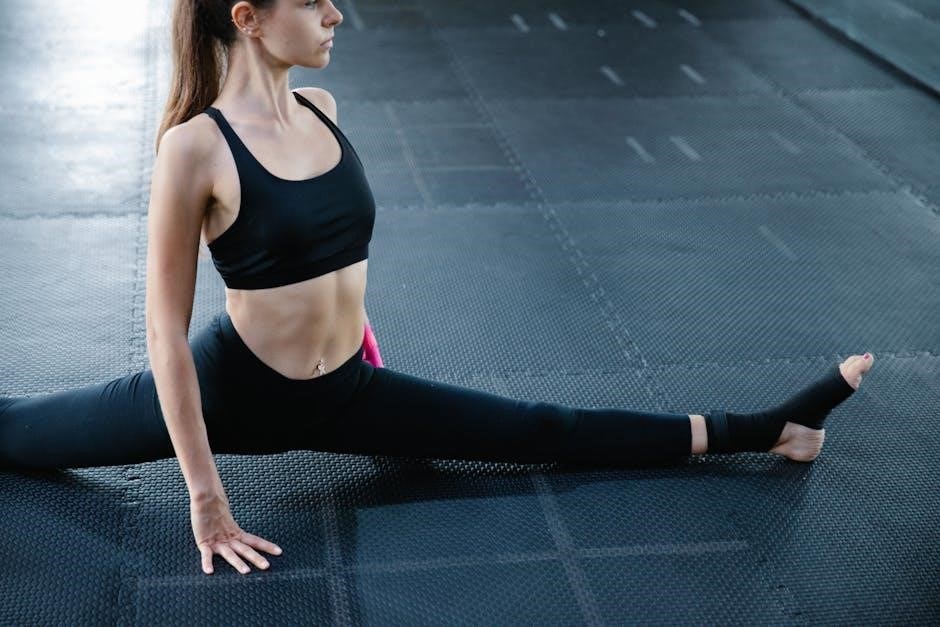
Consistent application of the techniques outlined in PNF stretching PDFs leads to long-term improvements in muscle elasticity and reduced stiffness, enhancing overall movement efficiency and reducing the risk of injury. This makes it a valuable tool for maintaining optimal physical health.
Enhanced Athletic Performance
PNF stretching PDF resources highlight how improved flexibility directly translates to enhanced athletic performance. Increased range of motion, achieved through PNF techniques, allows athletes to generate more power and efficiency in their movements. These guides detail how PNF can optimize biomechanics for specific sports.
By reducing muscle tightness and improving neuromuscular control, PNF, as explained in these PDFs, enables athletes to achieve greater stride lengths, jump higher, and execute skills with more precision. The ability to move through a fuller range of motion also minimizes the risk of muscle strains and tears during competition.
PNF stretching PDFs often include sport-specific protocols, demonstrating how to tailor the techniques to maximize performance gains in various athletic disciplines, ultimately leading to a competitive edge.
Rehabilitation Applications
PNF stretching PDF guides extensively cover its crucial role in rehabilitation, originating from its development for restoring movement post-injury or surgery. These resources detail how PNF techniques help regain range of motion and reduce muscle imbalances following orthopedic procedures or neurological events.
PDFs emphasize PNF’s ability to improve both passive and active range of motion, crucial for functional recovery. Therapists utilize PNF to address muscle weakness, spasticity, and contractures, facilitating a return to normal movement patterns. The guides often illustrate specific protocols for common rehabilitation scenarios.
Furthermore, PNF stretching PDFs explain how the neuromuscular facilitation aspect aids in re-educating muscles and improving coordination, accelerating the healing process and optimizing patient outcomes.
PNF Stretching Exercises (PDF Focus)
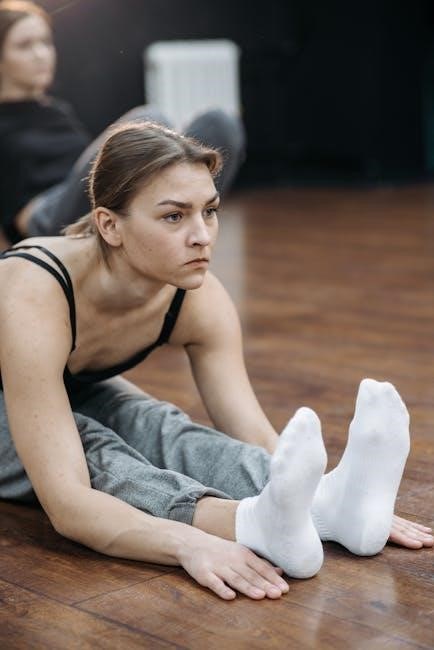
PNF stretching PDF guides commonly detail exercises for hamstrings, quadriceps, calves, and hip flexors, providing illustrated protocols for effective flexibility gains.
Hamstring PNF Stretching
Hamstring PNF stretching, often illustrated in PDF guides, typically involves lying supine with one leg extended. A partner (or strap) assists in elevating the leg towards the ceiling.
The technique utilizes the contract-relax method: the individual gently resists the partner’s stretch for 5-7 seconds, then relaxes, allowing for a deeper stretch.
PDF resources emphasize maintaining a neutral spine and avoiding locking the knee. Variations include incorporating an agonist contraction – contracting the quadriceps after the relax phase to further enhance the stretch.
Repetitions are usually performed 2-3 times, holding each stretch for 20-30 seconds. PDF guides often include diagrams demonstrating proper form and common errors to avoid, ensuring safe and effective hamstring flexibility improvement.
Quadriceps PNF Stretching
Quadriceps PNF stretching, frequently detailed in PDF guides, commonly involves lying prone or kneeling. A partner assists by flexing the knee, bringing the heel towards the glutes.
The hold-relax technique is often employed: the individual resists the partner’s stretch for 5-7 seconds, then relaxes, allowing for a greater range of motion. PDFs highlight the importance of core engagement to maintain a stable pelvis.
Another variation, detailed in many PDFs, is the contract-relax method, where the individual actively contracts the quadriceps against resistance before relaxing into the stretch.
PDF resources emphasize avoiding hyperextension of the knee and maintaining proper alignment. Repetitions are typically performed 2-3 times, holding each stretch for 20-30 seconds, promoting improved quadriceps flexibility.
Calf (Gastrocnemius & Soleus) PNF Stretching
Calf PNF stretching, as outlined in many PDF guides, targets both the gastrocnemius and soleus muscles. A common starting position is a lunge with one leg extended back, heel on the ground.
PDFs often demonstrate the hold-relax technique, where a partner gently dorsiflexes the foot, and the individual resists for 5-7 seconds before relaxing. This allows for a deeper stretch.
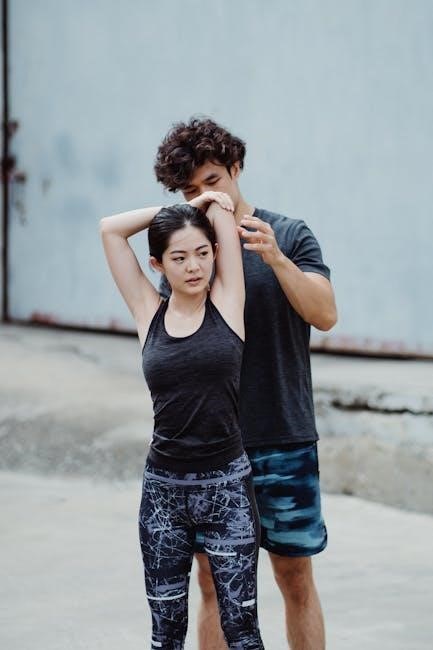
To isolate the soleus, the knee is bent during the stretch, as detailed in downloadable PDFs. The contract-relax method involves plantarflexing against resistance before relaxing into the stretch.
PDF resources stress maintaining a straight back and avoiding bouncing. Holding each stretch for 20-30 seconds, with 2-3 repetitions, maximizes flexibility and range of motion in the ankle joint.
Hip Flexor PNF Stretching
Hip flexor PNF stretching, frequently detailed in PDF guides, often begins with a half-kneeling position. The individual leans forward, feeling a stretch in the front of the hip.
PDF instructions commonly illustrate the contract-relax technique; the individual attempts to posteriorly tilt the pelvis against a partner’s resistance for 5-7 seconds, then relaxes.
Another variation, found in downloadable PDFs, involves contracting the gluteal muscles (agonist contraction) after the relax phase to further enhance the stretch.
PDF resources emphasize maintaining a neutral spine and avoiding arching the lower back. Repeating this process 2-3 times, holding each stretch for 20-30 seconds, improves hip mobility and flexibility.
Safety Precautions and Contraindications
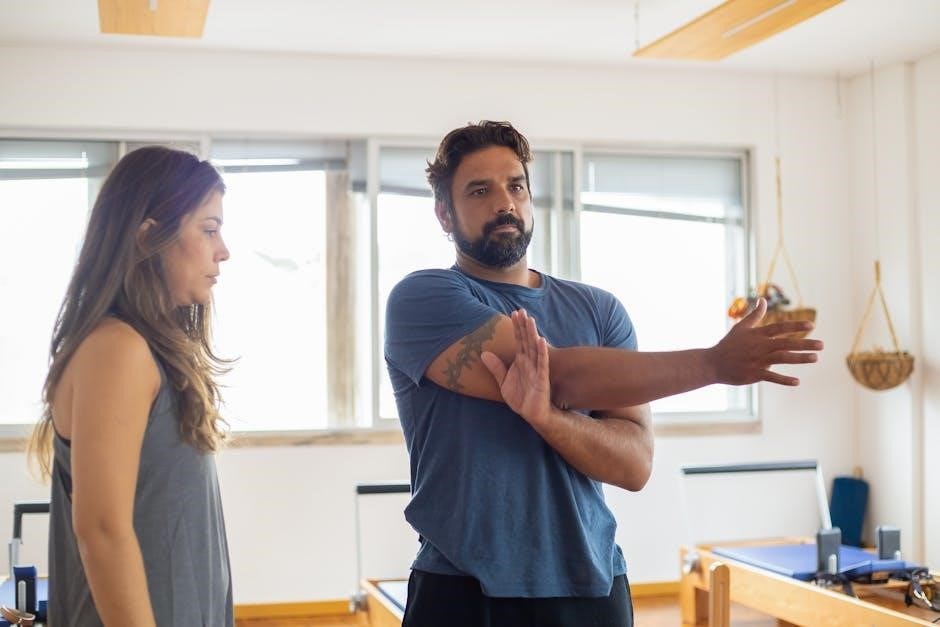
PNF stretching PDFs highlight warming up beforehand and avoiding overstretching; contraindications include acute injuries, inflammation, and certain medical conditions.
Warming Up Before PNF Stretching
PNF stretching PDFs consistently emphasize the critical importance of a thorough warm-up prior to initiating any PNF techniques. This preparation isn’t merely about increasing muscle temperature, though that’s a significant benefit. A proper warm-up primes the neuromuscular system, enhancing the effectiveness and safety of the stretches.
Begin with 5-10 minutes of light cardiovascular activity, such as jogging in place, jumping jacks, or cycling, to elevate heart rate and blood flow. Following this, incorporate dynamic stretches – controlled movements that take your joints through their full range of motion – targeting the muscle groups you intend to stretch with PNF.
Examples include leg swings, arm circles, and torso twists. This dynamic component prepares the muscles for the deeper stretches involved in PNF, reducing the risk of injury and maximizing flexibility gains. Ignoring this step can lead to muscle strains or tears.
Avoiding Overstretching
PNF stretching PDFs universally caution against overstretching, highlighting the potential for muscle damage and injury. The goal isn’t to force a stretch beyond your comfortable range, but to facilitate neuromuscular changes that allow for increased flexibility over time. Listen attentively to your body’s signals; pain is a clear indication to ease off immediately.
Focus on reaching the point of mild tension, not pain. During the contraction phase of PNF, ensure the isometric contraction isn’t maximal – aim for approximately 50-75% of your maximum effort.
Respect your body’s limitations, especially when starting. Progress gradually, increasing the intensity and range of motion incrementally with each session. A good PDF guide will emphasize controlled movements and mindful awareness throughout the process, preventing excessive strain.
Contraindications: When to Avoid PNF
PNF stretching PDFs consistently outline specific contraindications. Avoid PNF if you have acute muscle strains, sprains, or inflammation. Individuals with hypermobility or joint instability should exercise extreme caution, as PNF can exacerbate these conditions.
Those with osteoporosis or fragile bones are also advised to avoid PNF due to the potential for fractures.
Furthermore, PNF is generally not recommended for individuals with severe neurological conditions or those experiencing acute pain. Always consult a healthcare professional before starting PNF if you have any underlying health concerns. A comprehensive PDF will clearly state these precautions, prioritizing safety and responsible practice.
Finding and Utilizing PNF Stretching PDFs
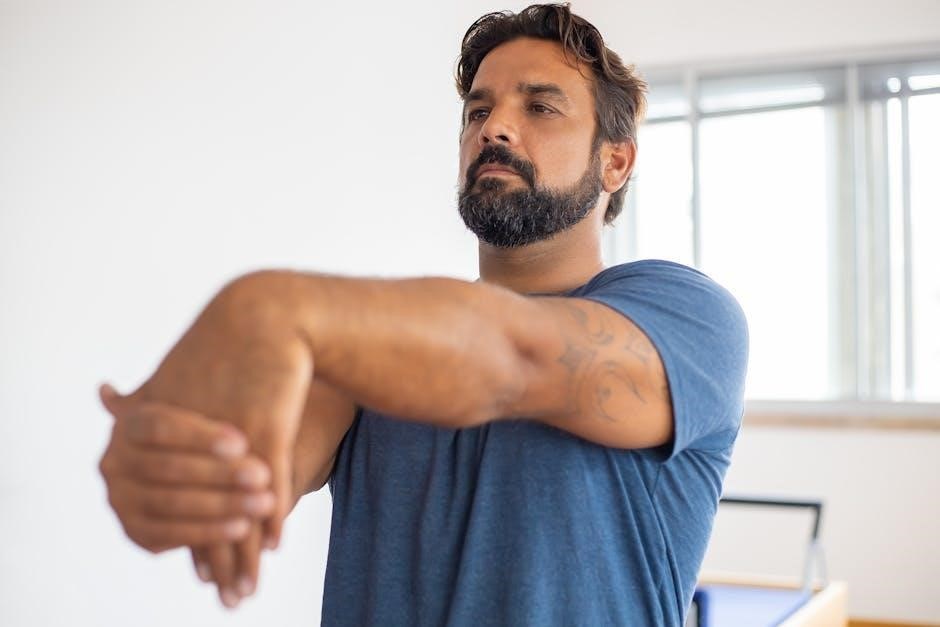
Numerous reliable sources offer PNF stretching PDFs, providing detailed guides for exercises and techniques; look for comprehensive content and clear instructions.
Reliable Sources for PNF Stretching PDFs
Finding trustworthy PNF stretching PDF resources is crucial for safe and effective practice. Several platforms consistently offer high-quality guides. University athletic departments often publish detailed protocols for their athletes, available online as downloadable PDFs.
Reputable physiotherapy clinics and rehabilitation centers frequently provide patient education materials, including PNF stretching guides, on their websites. Look for PDFs authored by qualified physical therapists or certified athletic trainers.
Organizations dedicated to sports medicine and fitness, such as the National Strength and Conditioning Association (NSCA), may offer resources or links to reliable PNF stretching PDFs. Be cautious of generic fitness websites; prioritize sources with demonstrated expertise in neuromuscular techniques and rehabilitation.
What to Look for in a Good PNF PDF Guide
A comprehensive PNF stretching PDF should clearly define the technique and its underlying principles – proprioceptive neuromuscular facilitation. Look for detailed, step-by-step instructions with accompanying illustrations or diagrams for each stretching technique (hold-relax, contract-relax, etc.).
The guide must emphasize safety precautions, including proper warm-up procedures and contraindications. A good PDF will specify which populations should avoid PNF stretching or modify techniques.
It should also outline specific exercises for major muscle groups (hamstrings, quads, calves, hip flexors) and provide guidance on progression. Finally, ensure the PDF is authored or reviewed by a qualified healthcare professional – a physical therapist or certified athletic trainer – to guarantee accuracy and safety.
Integrating PDF Instructions into Your Routine
When utilizing a PNF stretching PDF, begin by thoroughly reading the safety precautions and contraindications. Start with a dynamic warm-up before attempting any PNF techniques. Choose 2-3 exercises targeting specific muscle groups, referencing the PDF’s illustrations for correct form.
Perform each stretch slowly and controlled, following the prescribed hold times and contraction intensities. Consistency is key; aim for 2-3 sessions per week.
Progress gradually, increasing hold durations or resistance as flexibility improves. Don’t push beyond your comfortable range of motion. Regularly revisit the PDF to refine technique and explore variations. Remember, proper form, guided by the PDF, is crucial to maximize benefits and prevent injury.
Advanced PNF Concepts
PNF techniques leverage proprioception and neuromuscular facilitation, detailed in advanced PDF guides, for optimized flexibility gains and targeted muscle re-education.
Proprioception and its Role in PNF
Proprioception, the body’s ability to sense its position and movement, is fundamentally crucial to the effectiveness of PNF stretching. PDF guides often emphasize this connection, explaining how PNF techniques directly target and refine proprioceptive feedback loops. By incorporating contractions and relaxations, PNF doesn’t just lengthen muscles; it recalibrates the nervous system’s understanding of optimal range of motion.
This neuromuscular reset allows for greater flexibility and improved motor control. The techniques exploit the body’s natural reflexes, utilizing muscle spindle and Golgi tendon organ responses. Detailed PNF PDF resources illustrate how these mechanisms are engaged during each phase of the stretch, enhancing both passive and active range of motion. Understanding proprioception is key to maximizing the benefits of PNF and preventing injury.
Neuromuscular Facilitation Explained
Neuromuscular facilitation, the core principle of PNF stretching, is thoroughly explained in comprehensive PDF guides. It involves stimulating the nervous system to enhance muscle activation and relaxation, leading to increased flexibility. PNF techniques don’t simply stretch muscles passively; they actively engage the neuromuscular system to overcome limitations.
PDF resources detail how specific contraction-relaxation cycles influence muscle spindle activity and Golgi tendon organ responses, effectively “resetting” muscle tension. This process allows for a greater range of motion than traditional static stretching. Understanding this facilitation is vital for safely and effectively implementing PNF. The guides often provide visual aids and step-by-step instructions to demonstrate proper technique and maximize neuromuscular benefits.
Variations and Progressions of PNF Techniques
PNF stretching PDF guides often showcase variations beyond the core techniques, allowing for personalized routines. These include adjustments to contraction intensity, hold durations, and the incorporation of different movement patterns. Progressions are crucial; starting with simpler methods like hold-relax before advancing to more complex ones like rhythmic stabilization.
Detailed PDFs illustrate how to modify techniques based on individual flexibility levels and specific muscle groups. They emphasize the importance of gradual increases in stretch intensity and range of motion. Advanced variations might involve using resistance bands or partner assistance. Properly progressing through these techniques, as outlined in quality PDF resources, minimizes risk and maximizes gains in flexibility and neuromuscular control.