
Month: April 2026

vital signs record sheet pdf

Category : PDF

What is a Vital Signs Record Sheet?

Vital signs record sheets, often available as a PDF, are crucial tools for clinicians to systematically document patient physiological measurements.

These templates, like those on pdfFiller, facilitate tracking temperature, pulse, respiration, and blood pressure, aiding comprehensive patient assessment.

Additional Information:

  • Printable daily vital sign charts are readily available online.
  • Templates help assess patient vital signs effectively.

Definition and Purpose

A vital signs record sheet, frequently accessed as a PDF form, is a standardized document used by healthcare professionals to record a patient’s core physiological measurements.

Its primary purpose is to provide a concise, organized, and readily accessible overview of a patient’s health status over time.

These sheets, such as the Vital Signs Flow Sheet from Patient-Advocate.com, enable consistent data collection, including temperature, pulse rate, respiration rate, blood pressure, pain levels, and oxygen saturation.

Utilizing a template ensures all essential data points are captured, supporting informed clinical decision-making and effective patient monitoring.

Key Features:

  • Facilitates accurate and consistent data recording.
  • Supports trend analysis and early detection of changes.

Importance in Patient Monitoring

Vital signs record sheets, often utilized as downloadable PDFs, are fundamentally important in continuous patient monitoring.

Regular recording, using a standardized template, allows healthcare providers to quickly identify subtle changes in a patient’s condition, potentially indicating deterioration or improvement.

These sheets, like those found on pdfFiller, enable early detection of critical events, facilitating timely intervention and improved patient outcomes.

Consistent documentation supports effective communication among the care team, ensuring a coordinated approach to patient management and enhancing overall safety.

Benefits:

  • Early detection of patient deterioration.
  • Improved communication among healthcare staff.

Components of a Standard Vital Signs Record Sheet

A typical vital signs record sheet PDF includes sections for patient demographics, date/time, temperature, pulse, respiration, blood pressure, pain levels, and SpO2.

Key Elements:

  • Patient identification details.
  • Specific fields for each vital sign.

Patient Demographics Section

The Patient Demographics Section of a vital signs record sheet PDF is fundamental for accurate patient identification and record linkage. This section typically requires essential details such as the patient’s full name, date of birth (DOB), medical record number, and gender.

Accurate demographic data ensures that vital signs are correctly associated with the intended patient, minimizing potential errors in care. Some templates, like those found on Patient-Advocate.com, explicitly include fields for these details, streamlining the documentation process and promoting patient safety.

Important Considerations:

  • Verify information against official records.

Date and Time Recording

Precise Date and Time Recording is a critical component of any vital signs record sheet PDF. Each set of vital sign measurements must be meticulously timestamped to establish a chronological record of the patient’s physiological status.

This allows healthcare professionals to track trends, assess the effectiveness of interventions, and identify any acute changes. Templates often include dedicated fields for date and time, formatted for clarity (e.g., ). Consistent and accurate time documentation is essential for informed clinical decision-making.

Key Points:

  • Use a standardized time format.

Temperature Measurement

Temperature Measurement sections on a vital signs record sheet PDF typically include fields to record the temperature value and the measurement site (oral, rectal, axillary, tympanic). Accurate documentation of the method used is crucial for proper interpretation.

Standardized templates facilitate consistent data collection. Healthcare professionals should note any factors that might influence the reading. The sheet should allow for recording temperature in both Fahrenheit and Celsius, ensuring clarity and avoiding errors in patient care.

  • Specify the measurement method.

Pulse Rate Assessment

The Pulse Rate Assessment section within a vital signs record sheet PDF requires documenting beats per minute (BPM). Fields should include space for rate, rhythm (regular or irregular), and pulse strength (bounding, strong, weak, thready).

Standardized templates ensure consistent data capture. Noting the location where the pulse was measured (radial, apical, etc.) is essential. Accurate pulse rate documentation aids in evaluating cardiovascular function and identifying potential abnormalities, contributing to effective patient monitoring.

  • Record BPM, rhythm, and strength.

Respiratory Rate Observation

The Respiratory Rate Observation section on a vital signs record sheet PDF necessitates recording breaths per minute. Documenting the depth (shallow, normal, deep) and character (labored, easy) of respiration is also crucial.

Templates often include space to note any abnormal breathing patterns, such as wheezing or apnea. Accurate respiratory rate assessment is vital for evaluating a patient’s oxygenation and ventilation status, aiding in the early detection of respiratory distress or compromise.

  • Note breaths per minute, depth, and character.

Blood Pressure Recording

The Blood Pressure Recording section within a vital signs record sheet PDF requires documenting both systolic and diastolic pressures, typically expressed in millimeters of mercury (mmHg).

Templates often include columns for recording the arm used (left or right) and the patient’s position during measurement. Accurate blood pressure assessment is fundamental for evaluating cardiovascular function and identifying potential hypertension or hypotension. Consistent documentation supports effective patient monitoring and timely intervention.

  • Record systolic and diastolic pressures accurately.

Pain Level Assessment

A vital signs record sheet PDF commonly incorporates a Pain Level Assessment section, utilizing numerical rating scales (0-10) or visual analog scales to quantify a patient’s subjective experience.

Templates often prompt documentation of pain location, character (sharp, dull, aching), and alleviating/aggravating factors. Consistent pain assessment is crucial for effective pain management and improving patient comfort. Accurate recording supports informed clinical decision-making and appropriate analgesic interventions.

  • Utilize standardized pain scales for objective measurement.

Oxygen Saturation (SpO2) Monitoring

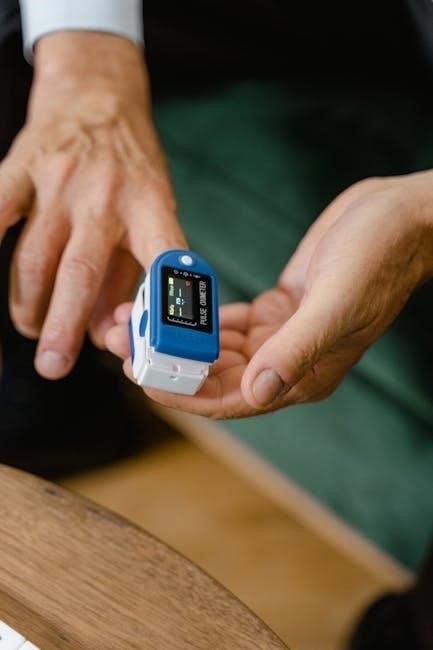
Vital signs record sheet PDFs invariably include a dedicated field for Oxygen Saturation (SpO2) monitoring, a critical indicator of respiratory function.

This section records the percentage of hemoglobin saturated with oxygen, typically measured using a pulse oximeter. Templates facilitate tracking SpO2 levels alongside other vital signs, enabling early detection of hypoxemia. Consistent monitoring is essential for patients with respiratory conditions or those at risk of oxygen desaturation, guiding timely interventions.

  • Document SpO2 with the method used (e.g., pulse oximetry).

Vital Signs Record Sheet Templates: Formats and Availability

Vital signs record sheet PDFs are widely accessible in printable, fillable PDF, and Excel formats.

Resources like pdfFiller, Printables Hub, and Patient-Advocate.com offer diverse templates for convenient download and use.

  • Ready-to-use PDF forms streamline patient monitoring.

Printable PDF Templates

Printable vital signs record sheet PDFs offer a straightforward, no-tech solution for documenting patient data.

These templates, easily found on sites like Printables Hub, are ideal for facilities or individuals preferring a paper-based system.

They typically include pre-designed tables for recording temperature, pulse, respiration, blood pressure, pain levels, and oxygen saturation.

  • Convenient for quick data capture during rounds.
  • Eliminates the need for electronic devices.
  • Suitable for situations with limited technology access.

Downloadable PDFs ensure consistent formatting and ease of reproduction.

Digital/Fillable PDF Templates

Digital, fillable vital signs record sheet PDFs combine the convenience of a digital format with the familiarity of a traditional chart.

Platforms like pdfFiller host these templates, allowing direct data entry into the form fields—Patient name, DOB, Physician, and vital sign measurements.

This eliminates handwriting and potential for misinterpretation, streamlining documentation.

Benefits Include:

  • Easy data entry and storage.
  • Reduced paperwork and improved organization.
  • Potential for integration with other digital systems.

These PDFs can be saved, emailed, and printed as needed.

Excel-Based Templates

While PDFs are common, vital signs record sheets can also be found as Excel-based templates, offering a different set of advantages.

Excel allows for customized calculations, automated charting, and more complex data analysis beyond simple recording.

Users can create formulas to flag abnormal values or generate trend graphs directly within the spreadsheet.

  • Customizable data fields and calculations.
  • Ability to create visual representations of data.
  • Easy data sorting and filtering.

However, Excel requires more technical skill than a pre-formatted PDF.
Using a Vital Signs Record Sheet: A Step-by-Step Guide

Begin by accessing a vital signs record sheet PDF; fill essential fields like patient details and date.

Accurately measure and document each vital sign in the designated table, ensuring clarity.

Important Note:

Review and interpret the recorded data for any concerning trends.

Preparing the Sheet

Before initiating vital sign measurements, ensure you have a readily available vital signs record sheet PDF, either printed or digitally accessible.

Verify all necessary equipment – thermometer, sphygmomanometer, pulse oximeter – is functioning correctly and within calibration dates.

Confirm patient identification and gather any relevant medical history that might influence vital sign interpretation.

Clearly label the sheet with the patient’s name, date, and time of assessment, utilizing a standardized format for consistency.

Having a prepared sheet streamlines the process and minimizes errors during data collection.

Key Considerations:

  • Ensure the PDF is the current version.
  • Double-check all equipment.

Accurate Measurement Techniques

Employing standardized techniques is paramount when utilizing a vital signs record sheet PDF for data capture. For temperature, select the appropriate method – oral, tympanic, axillary – and follow established protocols.

When measuring pulse, palpate the radial artery for a full 60 seconds, or 30 seconds multiplied by two, ensuring accurate count.

Respiratory rate assessment requires discreet observation, counting breaths per minute without alerting the patient.

Blood pressure measurement demands proper cuff size and technique, following auscultatory methods.

Important Reminders:

  • Consistent technique ensures reliable data.
  • Document any deviations from normal procedures.

Data Entry and Documentation

When completing a vital signs record sheet PDF, legibility and completeness are essential. Enter all measurements accurately into the designated fields, utilizing consistent units – Celsius or Fahrenheit for temperature, beats per minute for pulse, and so on.

Clearly document the time each vital sign was obtained, alongside any relevant observations or contextual factors.

If using a fillable PDF, ensure all fields are properly populated before saving.

  • Avoid abbreviations; use full terms for clarity.
  • Initial and date each entry to maintain accountability.

Reviewing and Interpreting Vital Signs

Regularly reviewing completed vital signs record sheet PDFs is critical for identifying trends and potential patient deterioration. Compare current readings to baseline values and established normal ranges.

Look for significant deviations or patterns indicating a change in a patient’s condition.

Utilize resources like Normal Vital Signs Charts to aid interpretation.

Important Steps:

  • Consider the patient’s overall clinical picture.
  • Document any concerning findings and escalate as needed.

Benefits of Using a Standardized Vital Signs Record Sheet

Standardized vital signs record sheet PDFs improve data accuracy, enhance communication, and streamline care, facilitating trend analysis for better clinical outcomes.

Key Advantages:

  • Improved organization and efficiency.
  • Automated data collection.

Improved Data Accuracy

Utilizing a standardized vital signs record sheet PDF significantly minimizes errors in data collection. Pre-defined fields and structured formats, available through resources like pdfFiller, reduce ambiguity and ensure all necessary measurements are consistently recorded.

This structured approach, compared to freehand notes, lessens the chance of misinterpretation or omission of critical information.

Benefits of Accuracy:

  • Reliable patient monitoring.
  • Better informed clinical decisions.

Consistent data entry contributes to a more accurate patient health profile.

Enhanced Communication Among Healthcare Professionals

A standardized vital signs record sheet PDF fosters seamless communication between doctors, nurses, and other healthcare team members. Clear, concise documentation, easily shared electronically or printed, ensures everyone accesses the same accurate patient information.

Using a consistent template, like those found on Patient-Advocate.com, eliminates confusion stemming from varied charting styles.

Improved Collaboration:

  • Faster handoffs during shift changes.
  • Reduced risk of miscommunication.

This streamlined process improves overall patient care coordination.

Streamlined Patient Care

Employing a vital signs record sheet PDF significantly streamlines patient care workflows. Pre-designed templates, accessible via platforms like pdfFiller, allow for quick and efficient data capture during assessments.

This reduces the time spent on documentation, freeing up healthcare professionals to focus more directly on patient needs.

Efficiency Gains:

  • Faster identification of critical changes.
  • Improved response times to patient deterioration.

A well-organized chart supports proactive and effective care delivery.

Facilitates Trend Analysis

A standardized vital signs record sheet PDF is invaluable for tracking patient health trends over time. Consistent documentation within a structured template—easily found online—allows clinicians to identify subtle changes that might otherwise be missed.

This longitudinal data supports informed decision-making regarding treatment adjustments and preventative measures.

Analytical Benefits:

  • Early detection of worsening conditions.
  • Evaluation of treatment effectiveness.

The chart enables proactive, data-driven patient management.

Where to Find Reliable Vital Signs Record Sheet PDFs

Reliable vital signs record sheet PDFs are accessible through resources like pdfFiller, Printables Hub, and Patient-Advocate.com, offering various templates for download.

Resource Highlights:

  • pdfFiller provides fillable forms.
  • Printables Hub offers printable options.

pdfFiller Resources

pdfFiller stands out as a comprehensive online resource for accessing and utilizing vital signs record sheet PDFs. The platform offers a wide selection of pre-built, fillable templates designed to streamline patient monitoring documentation.

Users can easily access essential fields like patient details (name, DOB), physician information, and dedicated sections for recording vital signs – temperature, blood pressure, pulse, respiration, and pain levels.

  • Accessibility: Easily find and download PDF forms.
  • Fillable Fields: Conveniently input data directly into the template.
  • Customization: Modify forms to suit specific facility needs.

pdfFiller simplifies the process of creating and managing vital signs flow sheets, enhancing efficiency in healthcare settings.

Printables Hub Options

Printables Hub provides a diverse collection of free, printable vital signs log sheet templates in PDF format, catering to various nursing and healthcare documentation needs. These resources include daily vital sign charts and trackers, designed for efficient patient monitoring.

The available templates offer a structured format for recording essential measurements like temperature, pulse rate, respiration rate, blood pressure, and oxygen saturation levels.

  • Variety: Numerous templates to choose from.
  • Accessibility: Free and readily downloadable PDFs.
  • Simplicity: Easy-to-use formats for quick data entry.

Printables Hub offers a convenient solution for healthcare professionals seeking readily available vital signs documentation tools.

Patient-Advocate.com Examples

Patient-Advocate.com offers a readily available vital signs flow sheet in PDF format, designed for comprehensive patient monitoring and documentation. This particular template includes dedicated sections for recording patient demographics, date, weight, temperature, blood pressure, pulse, pulse oximetry, and pain levels.

The sheet also provides space for nurse’s initials and notes, facilitating clear communication among healthcare providers.

  • Comprehensive: Covers essential vital signs.
  • User-Friendly: Simple layout for easy data entry.
  • Professional: Suitable for clinical settings.

This PDF provides a practical tool for maintaining accurate and organized patient records.

Customizing Vital Signs Record Sheets

PDF vital signs record sheets can be tailored by adding facility logos, specific protocols, or fields for unique patient populations.

Integration with Electronic Health Records (EHR) streamlines workflows.

Considerations:

  • Facility-specific data.
  • Patient population needs.

Adding Facility-Specific Information

PDF vital signs record sheets offer a customizable base for healthcare facilities. Templates can be branded with hospital logos and contact details, ensuring clear ownership and easy identification.

Adding specific unit names, location codes, or internal protocol numbers enhances organization and traceability.

Furthermore, incorporating pre-approved nursing signatures or physician authorization lines streamlines documentation processes.

Key Customizations:

  • Facility logo and contact information.
  • Unit/location identifiers.
  • Internal protocol references.

These additions maintain standardization while reflecting the unique operational needs of each healthcare setting.

Tailoring to Specific Patient Populations

Vital signs record sheet PDF templates can be adapted for specialized patient groups. Pediatric charts may include growth parameters alongside standard vitals, while geriatric versions could emphasize fall risk assessments.

For cardiac patients, dedicated sections for edema scoring or medication lists prove invaluable.

  • Pediatric growth charts integration.
  • Geriatric fall risk assessment fields.
  • Cardiac-specific data tracking.

Customizing templates ensures relevant data capture, improving the quality of care and supporting targeted interventions for diverse patient needs.

Integrating with Electronic Health Records (EHR)

Seamlessly incorporating vital signs record sheet PDF data into Electronic Health Records (EHR) streamlines workflows and minimizes errors. Digital templates with fillable fields facilitate direct data transfer, eliminating manual entry.

API integrations allow automated population of EHR fields, enhancing data accuracy and accessibility.

  • Reduced manual data entry.
  • Improved data accuracy.
  • Enhanced EHR data accessibility.

This integration fosters a more connected and efficient healthcare ecosystem, supporting informed clinical decision-making;

Normal vs. Abnormal Vital Signs Ranges

Vital signs record sheet PDFs often include reference ranges for temperature, pulse, respiration, blood pressure, and SpO2, aiding quick identification of abnormalities.

Resources:

  • Normal/Abnormal charts enhance assessment.

Normal Temperature Ranges

Vital signs record sheet PDFs typically define normal body temperature as 97.8°F (36.5°C) to 99°F (37.2°C), though slight variations exist.

Temperature readings above 100.4°F (38°C) generally indicate a fever, prompting further investigation and documentation on the PDF form.

Hypothermia, defined as a temperature below 95°F (35°C), also requires immediate attention and detailed recording.

  • Measurement method (oral, rectal, axillary) impacts normal ranges.
  • Individual variations can occur; consistent monitoring is key.

Normal Pulse Rate Ranges

A vital signs record sheet PDF generally indicates a normal resting pulse rate for adults falls between 60 and 100 beats per minute (bpm).

However, factors like age, fitness level, medication, and emotional state can influence this range, necessitating careful observation and documentation.

Pulse rates consistently above 100 bpm (tachycardia) or below 60 bpm (bradycardia) warrant further assessment and notation on the PDF.

Key Points for Documentation:

  • Record pulse rate alongside rhythm and strength.
  • Note any irregularities observed during assessment.

Normal Respiratory Rate Ranges

A standard vital signs record sheet PDF typically defines a normal respiratory rate for adults as 12 to 20 breaths per minute.

Accurate respiratory rate assessment, documented on the PDF, is vital as deviations can signal underlying medical conditions.

Rates exceeding 20 breaths per minute (tachypnea) or falling below 12 (bradypnea) require further investigation and detailed charting.

Important Considerations for Recording:

  • Note the depth and character of respirations.
  • Document any labored breathing or use of accessory muscles.

Normal Blood Pressure Ranges

A comprehensive vital signs record sheet PDF generally indicates a normal blood pressure reading as less than 120/80 mmHg.

Systolic pressure (top number) represents the force during heart contraction, while diastolic (bottom number) reflects pressure between beats.

Consistent documentation on the PDF is crucial; readings above 130/80 mmHg may indicate hypertension, requiring clinical attention.

Key Points for Accurate Recording:

  • Record blood pressure in mmHg.
  • Note the arm used and patient position.

Normal Oxygen Saturation Ranges

A standard vital signs record sheet PDF typically defines a normal oxygen saturation (SpO2) range as 95% to 100%.

This percentage indicates the amount of oxygen carried by red blood cells, crucial for tissue function.

Values below 90% suggest hypoxemia, potentially requiring supplemental oxygen, and should be meticulously documented on the PDF.

Important Considerations for Documentation:

  • Note if the patient is on supplemental oxygen.
  • Record the method of SpO2 measurement (pulse oximetry).

Advanced Features in Vital Signs Tracking

Modern vital signs record sheet PDFs increasingly incorporate Early Warning Scores (EWS) and trend analysis charts for proactive patient risk assessment.

Automated alerts for abnormal values enhance timely intervention.

Early Warning Scores (EWS)

Early Warning Scores (EWS), integrated into some vital signs record sheet PDFs, are physiological scoring systems designed to detect subtle deterioration in a patient’s condition.

These scores assign points based on deviations from normal ranges in vital signs – respiration rate, oxygen saturation, temperature, blood pressure, pulse rate, and level of consciousness.

A rising EWS triggers escalating levels of clinical response, ensuring prompt intervention and potentially preventing adverse events.

Utilizing EWS within a standardized PDF streamlines the identification of at-risk patients, improving patient safety and outcomes.

Key Benefits:

  • Facilitates early detection of deterioration.
  • Standardizes response to patient risk.

Trend Analysis Charts

Many advanced vital signs record sheet PDFs incorporate trend analysis charts to visually represent changes in a patient’s physiological data over time.

These charts plot vital signs – temperature, pulse, blood pressure, and respiration rate – allowing clinicians to quickly identify patterns and deviations from baseline.

Visualizing trends aids in assessing the effectiveness of interventions and predicting potential complications.

The integration of charts within a PDF format enhances data interpretation and supports informed clinical decision-making, improving overall patient care.

Benefits of Charts:

  • Facilitates pattern recognition.
  • Supports proactive intervention.

Automated Alerts for Abnormal Values

Modern vital signs record sheet PDFs, particularly those integrated with digital systems, often feature automated alerts for abnormal values.

These systems are programmed with pre-defined normal ranges for each vital sign, triggering notifications when measurements fall outside these parameters.

Such alerts prompt immediate clinical attention, potentially preventing adverse events and improving patient safety.

This functionality streamlines workflow and ensures timely intervention, especially crucial in fast-paced healthcare settings, enhancing the utility of the PDF template.

Alert System Advantages:

  • Enhances patient safety.
  • Improves response time.

Legal and Ethical Considerations

Vital signs record sheet PDFs necessitate adherence to patient confidentiality and accurate record-keeping practices.

Proper documentation, as outlined in procedures, is legally required and ethically vital for quality patient care.

  • Maintain patient privacy.
  • Ensure documentation accuracy.

Patient Confidentiality

Vital signs record sheet PDFs contain sensitive patient health information, demanding strict adherence to confidentiality protocols.

Healthcare professionals must safeguard this data, complying with regulations like HIPAA, preventing unauthorized access or disclosure.

Secure storage of both physical and digital PDF copies is paramount, alongside responsible data handling practices.

Access should be limited to authorized personnel only, ensuring patient privacy is consistently protected throughout the documentation process.

  • Never share patient data without proper authorization.
  • Utilize secure systems for storing PDF documents.

Accurate Record Keeping

Maintaining precise records on vital signs record sheet PDFs is fundamental to quality patient care and legal defensibility.

All entries must be factual, legible, and promptly documented, avoiding alterations or assumptions.

Utilizing standardized PDF templates promotes consistency, minimizing errors and facilitating clear communication among healthcare providers.

Proper documentation supports informed clinical decision-making and ensures a comprehensive patient health history is readily available.

  • Double-check all measurements before recording them on the PDF.
  • Use approved abbreviations and terminology.

Proper Documentation Procedures

When utilizing a vital signs record sheet PDF, adhere to established protocols for accurate and complete documentation.

Always date and time each entry, and initial or sign to verify authorship.

Record all measurements objectively, noting any deviations from normal ranges or unusual observations.

If corrections are necessary, draw a single line through the error, initial, and write the correct value – never obliterate original data.

Essential Steps:

  • Follow facility-specific guidelines for PDF form completion.
  • Ensure the PDF is securely stored and accessible.

spirit guides and angels

Category : Guide

Spirit guides and angels are integral parts of our spiritual journey, offering support and direction, yet differing in origin and function.

They form a spiritual team, assisting us in evolving and aligning with our highest selves through unique communication methods and energies.

What are Spirit Guides?

Spirit guides are evolved souls who voluntarily choose to assist humans on their life paths, offering wisdom, protection, and encouragement. They aren’t deities, but rather beings who’ve lived before and gained higher perspectives.

These guides can manifest in various forms – guardian spirits, ancestral spirits offering familial support, ascended masters sharing profound teachings, or even totem animals embodying specific strengths.

They don’t interfere with free will, but provide gentle nudges and insights to help us navigate challenges and fulfill our potential;

What are Angels?

Angels are considered divine beings, emissaries of a higher power, radiating pure love and light. They are not reincarnated souls, but rather created as beings of energy and serve as messengers and protectors.

Existing within a complex angelic hierarchy, they fulfill specific roles, offering comfort, healing, and guidance aligned with divine will. They operate on a higher vibrational frequency.

Angels are often perceived as offering unwavering support and harmony, assisting in maintaining spiritual balance and connection to the divine source.

The Origins and Nature of Spirit Guides

Spirit guides are believed to be evolved souls who willingly assist others, offering wisdom and support from a place of experience and unconditional love.

Spirit Guides as Evolved Souls

Spirit guides aren’t created; they are souls who once lived human lives and have evolved through numerous incarnations, gaining wisdom and compassion along the way.

Having completed their earthly lessons, they choose to return and assist those still on the path of spiritual growth, offering guidance based on their lived experiences.

This evolution allows them to perceive higher dimensions and understand the complexities of the human experience, making their counsel invaluable.

They act as mentors, helping us navigate challenges and fulfill our soul’s purpose.

Types of Spirit Guides

Spirit guides manifest in diverse forms, each offering unique support. Guardian spirits provide constant protection, while ancestral spirits offer wisdom from family lineage.

Ascended Masters are enlightened beings who’ve mastered earthly lessons, and totem animals or power animals embody specific strengths and energies.

Gatekeepers safeguard spiritual pathways, ensuring we’re ready for higher levels of understanding.

These guides work harmoniously, tailoring their assistance to our individual needs and spiritual evolution.

Guardian Spirits

Guardian spirits are consistently present, offering unwavering protection and guidance throughout life’s journey. They act as watchful protectors, shielding us from negativity and steering us towards positive outcomes.

Often perceived as a comforting presence, they provide a sense of security and reassurance, especially during challenging times.

These spirits are deeply connected to our soul’s purpose, gently nudging us towards fulfilling our highest potential.

They offer subtle, yet powerful, support, ensuring our safety and well-being.

Ancestral Spirits

Ancestral spirits are the souls of deceased family members who remain connected to us, offering wisdom and support from the other side. They carry the legacy of our lineage, providing guidance rooted in familial experience.

These spirits often step in to offer healing, resolve past-life patterns, and strengthen our sense of belonging.

They may communicate through dreams, synchronicities, or intuitive feelings, offering insights into our heritage and purpose.

Honoring our ancestors creates a powerful connection.

Ascended Masters

Ascended Masters are enlightened beings who once lived on Earth, achieving spiritual mastery and now guiding humanity from a higher dimension. They embody specific virtues and teachings, offering support in areas like wisdom, creativity, or healing.

Figures like Jesus, Buddha, and Kuan Yin are considered Ascended Masters.

They assist us in activating our divine potential and embodying higher consciousness.

Connection often occurs through meditation and focused intention, receiving guidance through intuition and inner knowing.

Totem Animals and Power Animals

Totem Animals and Power Animals represent archetypal energies and offer guidance based on their inherent qualities. These animal spirits connect us to the wisdom of nature and our instincts.

Totem animals are often lifelong companions, representing family or clan energies, while power animals appear for specific journeys or challenges.

They communicate through dreams, synchronicities, and intuitive feelings.

Working with them involves honoring their spirit and integrating their lessons into our lives, fostering strength and clarity.

The Origins and Nature of Angels

Angels are divine beings of pure light and love, emanating from a higher realm, serving as messengers and protectors of humanity.

Angels as Divine Beings

Angels are considered emissaries of the Divine, existing outside the constraints of human experience and embodying pure, unconditional love. They aren’t bound by the same evolutionary processes as souls, instead originating directly from the source of creation.

These celestial beings are often described as beings of light, radiating a powerful and harmonious energy. Their primary purpose is to serve as intermediaries between the spiritual and material realms, offering guidance, protection, and healing to those who seek it. They are believed to be eternal and unchanging, dedicated to the well-being of humanity.

The Angelic Hierarchy

Angelic beings aren’t a homogenous group; instead, they exist within a complex hierarchical structure, often described in various spiritual traditions. This hierarchy typically features multiple choirs or orders, each with specific roles and responsibilities.

Commonly, the highest ranks include Seraphim, Cherubim, and Thrones, followed by Dominions, Virtues, Powers, Principalities, Archangels, and finally, Guardian Angels who interact most directly with humanity. Understanding this structure provides insight into the diverse functions and energies within the angelic realm, and their coordinated efforts.

Archangels and Their Roles

Archangels are powerful celestial beings who serve as leaders within the angelic hierarchy, often acting as divine messengers and protectors. Each Archangel embodies specific qualities and oversees particular areas of life.

Michael is known for courage and protection, Raphael for healing, Gabriel for communication and new beginnings, and Uriel for wisdom and enlightenment. Invoking these Archangels can bring focused support and guidance related to their respective domains, offering strength and clarity on your path.

Spirit Guides vs. Angels: Key Differences

Spirit guides and angels differ in origin—guides are evolved souls, while angels are divine beings—and communication styles, impacting the energy they bring;

Origin and Realm

Spirit guides originate as evolved human souls who have lived multiple lifetimes and chosen to assist others on their paths; they often reside in higher dimensions, closely connected to the earthly plane.

Conversely, angels are considered divine beings created by God, existing within celestial realms of pure light and energy, serving as messengers and protectors.

This fundamental difference in origin dictates their roles and the nature of their guidance, with guides offering relatable wisdom and angels providing divine intervention.

Communication Styles

Spirit Guide Communication often feels deeply personal and human-like, utilizing thoughts, feelings, and imagery; they may communicate through intuitive nudges or symbolic signs that resonate with individual experiences.

Angel Communication frequently manifests as clairsentience – a feeling of peace or warmth – or through direct, clear messages, often focused on reassurance and divine purpose.

While both utilize synchronicities, guides lean towards subtle cues, and angels towards more overt, emotionally uplifting experiences.

Spirit Guide Communication

Spirit Guide communication often feels deeply personal, resembling a close friend offering advice; they utilize thoughts, feelings, and vivid imagery tailored to your unique understanding.

Expect intuitive nudges, symbolic signs in daily life, and recurring numbers that hold personal meaning, prompting introspection and self-discovery.

Guides may appear more human in visualization, and their messages often encourage empowerment and taking responsibility for your path.

Angel Communication

Angel communication frequently manifests as clairsentience – a subtle knowing or feeling of peace, love, and reassurance washing over you.

Expect to receive messages through gentle whispers, comforting dreams, or a strong sense of divine presence, fostering harmony and protection.

Angels often communicate in symbols like feathers or orbs, and their energy feels lighter, more ethereal, and universally loving, offering divine guidance.

Energy and Vibration

Spirit guides and angels operate on different vibrational frequencies, influencing how we perceive their presence.

Angels radiate a high-frequency energy of pure, unconditional love and light, promoting peace and harmony within your aura.

Spirit guides, having experienced human life, possess a more grounded energy, offering relatable wisdom and practical guidance, resonating with earthly experiences.

Both aim to raise your vibration, but their approaches differ based on their origins and roles.

How to Connect with Spirit Guides

Connecting with spirit guides involves practices like meditation, journaling, and recognizing synchronicities, opening yourself to their subtle yet powerful guidance.

Meditation for Spirit Guide Contact

Meditation creates a quiet space for spirit guides to connect with you, bypassing the noise of daily life. Begin by finding a comfortable, undisturbed location and practicing deep, calming breaths.

Visualize a gentle, welcoming light surrounding you, and then intentionally invite your spirit guides to come forward. Don’t expect immediate, dramatic results; instead, focus on openness and receptivity.

Pay attention to any thoughts, feelings, or images that arise during your meditation, as these could be subtle messages from your guides. Regular practice strengthens this connection.

Journaling and Automatic Writing

Journaling provides a direct channel for communication with spirit guides and angels. Begin by simply writing whatever comes to mind, without censoring or overthinking.

Automatic writing takes this further – allowing your hand to move freely across the page, as if guided by an external force. It’s crucial to quiet your inner critic and trust the process.

Review your entries later, looking for recurring themes, symbols, or messages that resonate with you. This practice can reveal valuable insights and guidance.

Signs and Synchronicities

Spirit guides and angels often communicate through subtle signs and meaningful synchronicities. Pay attention to repeating numbers, feathers, songs, or even specific words that appear frequently.

These aren’t random occurrences; they are deliberate messages designed to catch your attention and confirm you’re on the right path. Trust your intuition when interpreting these signs.

Recognizing these patterns demonstrates openness to receiving guidance, strengthening your connection with your spiritual team and fostering a deeper understanding of their support.

How to Connect with Angels

Angels respond to sincere prayer, invocation, and creating sacred space; angel card readings can also offer insightful guidance and connection.

Prayer and Invocation

Prayer and invocation are powerful methods for connecting with angelic energies, acting as direct lines of communication to the divine realm.

When you pray or invoke, approach with reverence, gratitude, and a clear intention, specifically requesting angelic assistance or guidance.

Be open to receiving messages through feelings, thoughts, or signs, acknowledging that angelic responses may not always be what you expect.

Regular practice strengthens your connection, fostering a deeper relationship with your angelic support system and allowing their loving presence to permeate your life.

Angel Card Readings

Angel card readings offer a visual and intuitive way to receive guidance from angels, utilizing beautifully designed cards with symbolic imagery.

These cards act as a conduit, allowing angelic messages to surface through your intuition and interpretation of the card’s meaning.

When performing a reading, quiet your mind, shuffle the deck, and draw cards based on your question or intention.

Trust the first impressions and feelings that arise, as angels communicate through subtle cues and inner knowing, providing clarity and support.

Creating Sacred Space

Creating sacred space is essential for fostering a deeper connection with angels and spirit guides, establishing a tranquil and receptive environment.

This can involve cleansing the area with sage or incense, lighting candles, playing calming music, or adorning the space with crystals and meaningful objects.

Intention is key; clearly state your desire to connect with the angelic realm and invite their presence.

A sacred space signals your commitment to spiritual communication, allowing energies to flow freely and facilitating a more profound experience.

Can Angels and Spirit Guides Work Together?

Angels and spirit guides often collaborate as a “spiritual team,” offering complementary support and guidance on your life path, enhancing your journey.

The Spiritual Team Concept

The concept of a spiritual team acknowledges that we are rarely alone on our life’s journey; instead, we are surrounded by a multitude of benevolent beings offering assistance. This team includes spirit guides, angels, ascended masters, and even departed loved ones.

They work in harmony, each contributing unique strengths and perspectives to support our growth and evolution. Recognizing this team empowers us, knowing we have constant, loving support available as we navigate life’s challenges and opportunities.

Complementary Roles

Spirit guides and angels, while both supportive, fulfill distinct roles within our spiritual team. Angels often act as divine messengers, offering protection and radiating unconditional love, maintaining a connection to the source.

Spirit guides, frequently evolved souls, provide more personalized guidance based on life experiences, helping us navigate earthly lessons and fulfill our soul’s purpose. Their combined energies create a powerful synergy, fostering holistic growth and well-being.

Recognizing Messages from Spirit Guides and Angels

Messages arrive through various intuitive channels like clairvoyance, clairsentience, and clairaudience, requiring openness and practice to discern their gentle guidance.

Clairvoyance

Clairvoyance, meaning “clear seeing,” involves receiving messages from spirit guides and angels through visual impressions – images, colors, or even full scenes appearing in your mind’s eye.

These aren’t necessarily physical sights, but internal visualizations. They can manifest during meditation, quiet contemplation, or even spontaneously throughout the day.

Pay attention to recurring symbols, vivid imagery, or flashes of light, as these could be your spiritual team attempting to communicate visually. Trust what you “see” internally, even if it doesn’t make immediate sense.

Clairsentience

Clairsentience, or “clear feeling,” is the ability to receive information from spirit guides and angels through physical sensations and emotional impressions.

This can manifest as a gut feeling, a sudden wave of emotion, a tingling sensation, or even physical discomfort. You might intuitively know something without logical explanation.

Pay attention to these subtle bodily cues, as they are often your spiritual team communicating. Trust your intuition and acknowledge the feelings that arise, discerning their source.

Clairaudience

Clairaudience, meaning “clear hearing,” involves receiving messages from spirit guides and angels through audible means, though not always with the physical ears.

This can present as inner voices, distinct thoughts that aren’t your own, or even external sounds like whispers, music, or tones. Some may hear clear words or phrases.

Be open to subtle auditory cues and trust what you hear. Discernment is key; ensure the messages align with love and light, confirming their divine origin.

Protecting Yourself During Spiritual Communication

Grounding and setting boundaries are crucial when connecting with spirit guides and angels, ensuring a safe and positive experience.

Utilize discernment and intuition to verify the source and intention of any received messages.

Grounding Techniques

Grounding is essential for maintaining stability and protecting your energy during spiritual communication with spirit guides and angels. Visualize roots extending from your feet deep into the earth, anchoring you firmly.

Spend time in nature, connecting with the earth’s energy through mindful walking or simply sitting amongst trees. Physical activity, like exercise or dancing, can also effectively ground you.

Consuming grounding foods, such as root vegetables, and practicing mindful breathing exercises further enhance this connection, preventing overwhelm and ensuring a balanced exchange.

Setting Boundaries

Setting boundaries is crucial when interacting with spirit guides and angels to maintain your personal power and energetic integrity. Clearly define what types of communication you’re open to and what feels intrusive.

Politely but firmly decline guidance that doesn’t resonate with your intuition or free will. Remember, you are in control of the connection.

Visualize a protective shield around yourself, allowing only positive and supportive energies to enter, safeguarding your emotional and spiritual well-being during these interactions.

Discernment and Intuition

Discernment and trusting your intuition are vital when receiving messages from spirit guides and angels. Not every thought or feeling is from them; learn to differentiate between genuine guidance and your own internal dialogue.

Pay attention to how the information feels – does it resonate with truth and love, or does it evoke fear or doubt?

Develop your inner knowing through meditation and self-reflection, strengthening your ability to accurately interpret spiritual messages and ensure they align with your highest good.

The Role of Free Will

Spirit guides and angels offer guidance, but never intervention, respecting our free will and empowering us to make choices aligned with our soul’s path.

Guidance vs. Intervention

Spirit guides and angels operate on the principle of assisting, not controlling, our life’s journey. They present opportunities and insights, offering gentle nudges towards growth and alignment, but they will never directly impose their will upon us.

This distinction is crucial; intervention would negate our free will, hindering the soul’s learning process. Their role is to illuminate possibilities, empowering us to choose our path and take responsibility for our decisions, fostering genuine empowerment and spiritual evolution.

Empowerment and Responsibility

Connecting with spirit guides and angels isn’t about seeking external solutions, but about activating our inner wisdom and strength. They serve as catalysts, reminding us of our inherent power to create and manifest our desired reality.

Accepting their guidance necessitates embracing personal responsibility for our choices and outcomes; This partnership fosters self-reliance and encourages us to actively participate in shaping our lives, leading to profound personal growth and authentic self-expression.

Spirit Guides and Angels in Different Cultures

Indigenous traditions and religious perspectives worldwide recognize benevolent spiritual entities offering guidance, though names and interpretations vary greatly.

Indigenous Traditions

Indigenous cultures often view spirit guides as ancestral spirits, totem animals, or nature spirits deeply connected to the land and its energies.

These guides are believed to offer wisdom, protection, and healing, communicating through dreams, visions, and signs in the natural world.

Many traditions emphasize a reciprocal relationship with these spirits, honoring them through ceremonies and respecting the balance of nature.

Unlike the hierarchical structure of angels in some religions, indigenous spirit guides are often seen as equals, offering assistance based on mutual respect and understanding.

Religious Perspectives

Various religions present diverse views on beings akin to spirit guides and angels. Abrahamic faiths often emphasize angels as divine messengers and protectors, serving God’s will.

Some interpretations acknowledge a broader spectrum of spiritual entities, while others focus solely on angelic beings; Eastern religions, like Hinduism and Buddhism, feature deities and enlightened beings who can offer guidance.

These perspectives often differ in their understanding of the origin, role, and accessibility of these spiritual helpers, reflecting unique theological frameworks.

Concepts of saints and ascended masters also provide guidance.

Embracing Your Spiritual Support System

Recognizing and connecting with spirit guides and angels enriches life, offering comfort, direction, and a sense of belonging within the universe.

Embrace this spiritual team, understanding their unique roles and respecting their guidance while honoring your own free will.

Cultivate open communication through practices like meditation and journaling, remaining discerning and grounded.

Trust your intuition and acknowledge the signs they send, fostering a harmonious relationship with these benevolent forces.

Ultimately, they support your journey.


pnf stretching pdf

Category : PDF

PNF Stretching PDF: A Comprehensive Guide

PNF stretching, detailed in downloadable PDF guides, utilizes neuromuscular techniques to enhance flexibility, originally for rehabilitation, now popular in fitness and sports.

What is PNF Stretching?

PNF stretching, or Proprioceptive Neuromuscular Facilitation, represents a sophisticated stretching method that uniquely blends passive stretching with isometric muscle contractions. This technique is designed to significantly improve range of motion (ROM) and overall flexibility. Initially developed as a rehabilitation tool, particularly to assist individuals in regaining movement post-injury or surgery, PNF has gained widespread acceptance within athletic training and general fitness regimes.

The core principle revolves around leveraging the body’s neuromuscular reflexes to achieve greater flexibility gains. Therapists frequently employ PNF to enhance both passive range of motion (PROM) and active range of motion (AROM). Detailed PDF guides often illustrate how these contractions and stretches work synergistically, offering a comprehensive understanding of the process.

The Core Principles of PNF Stretching

PNF stretching fundamentally operates on the principles of stimulating neuromuscular responses to facilitate increased flexibility. These responses include autogenic and reciprocal inhibition. Autogenic inhibition involves activating the Golgi tendon organs, causing muscle relaxation during sustained contraction. Reciprocal inhibition utilizes the opposing muscle group to assist in stretching, leveraging the nervous system’s natural responses.

PDF guides emphasize the importance of controlled contractions and precise positioning. The technique isn’t simply about forcing a stretch; it’s about engaging the nervous system to allow a greater range of motion. Understanding these principles, often detailed in instructional PDFs, is crucial for safe and effective application, maximizing benefits and minimizing risk of injury.

History and Development of PNF Techniques

PNF stretching originated in the 1940s, developed by physical therapists Herman Kabat and Margaret Knott, initially to treat patients with neurological conditions like polio and cerebral palsy. Their work focused on utilizing muscle contractions to restore function and improve movement patterns. Early PNF techniques were complex, requiring specialized training and understanding of neuromuscular physiology.

Over time, simplified versions emerged, becoming popular in sports medicine and fitness. Many PDF resources now detail these adapted techniques. The evolution reflects a shift from purely rehabilitative use to performance enhancement. PDF guides often trace this history, highlighting how understanding the original principles informs modern applications, ensuring effective and safe stretching practices.

Types of PNF Stretching Techniques

PNF techniques, often detailed in PDF guides, include Hold-Relax, Contract-Relax, Hold-Relax with Agonist Contraction, and Rhythmic Stabilization for flexibility gains.

Hold-Relax Technique

Hold-Relax, frequently illustrated in PNF stretching PDF guides, is a foundational technique. It begins with a passive stretch to the target muscle, held for approximately 20-30 seconds, bringing it to its barrier.

Next, the individual isometrically contracts the stretched muscle against an immovable resistance – often a partner or stable object – for 5-7 seconds. Crucially, there’s no joint movement during this contraction.

Following the contraction, the muscle is relaxed, and then a new passive stretch is applied, aiming to move beyond the original range of motion. This leverages the post-contraction relaxation to achieve greater flexibility. PDF resources emphasize repeating this process 2-3 times for optimal results, enhancing neuromuscular efficiency.

Contract-Relax Technique

Contract-Relax, a core method detailed in many PNF stretching PDF resources, differs slightly from Hold-Relax. It also starts with a passive stretch, bringing the muscle to its limit and holding it. However, instead of an isometric contraction against an immovable force, this technique involves a concentric contraction.

The individual actively contracts the muscle through a limited range of motion, typically resisted by a partner. This contraction lasts around 5-7 seconds. Following the contraction, the muscle is relaxed, and a new passive stretch is applied, aiming to surpass the previous range.

PDF guides highlight that this technique utilizes reciprocal inhibition, where contraction of the target muscle causes relaxation of its antagonist. Repeating this cycle 2-3 times maximizes flexibility gains and neuromuscular control.

Hold-Relax with Agonist Contraction

Hold-Relax with Agonist Contraction, often detailed in advanced PNF stretching PDF guides, builds upon the Hold-Relax technique for enhanced results. It begins similarly – a passive stretch to the muscle’s limit, followed by an isometric contraction against resistance for 5-7 seconds.

However, the key difference lies in the subsequent step. After relaxing the target muscle, instead of another passive stretch, the agonist muscle (the muscle opposing the stretched muscle) is actively contracted. This pulls the limb further into the stretch.

PDF resources emphasize this utilizes autogenic and reciprocal inhibition, deepening the stretch. This technique is particularly effective for increasing range of motion and is often recommended for athletes seeking peak performance.

Rhythmic Stabilization

Rhythmic Stabilization, a PNF technique often explained in comprehensive stretching PDF guides, differs significantly from other methods. It focuses on establishing a comfortable range of motion and improving muscle control, rather than aggressively increasing flexibility.

This involves a slow, rhythmic alternating contraction and relaxation of agonist and antagonist muscle groups. The partner provides resistance matching the patient’s effort, creating a cyclical pattern. PDF resources highlight the importance of controlled movements and patient comfort.

It’s particularly useful for individuals with neurological conditions or those recovering from injury, aiming to improve coordination and proprioception. Unlike other PNF techniques, it doesn’t typically involve holding stretches at their end range.

Benefits of PNF Stretching

PNF stretching, as detailed in PDF guides, increases range of motion, improves muscle flexibility, enhances athletic performance, and aids rehabilitation effectively.

Increased Range of Motion

PNF stretching, comprehensively explained in available PDF resources, is particularly effective at increasing range of motion due to its unique neuromuscular approach. Unlike static stretching, PNF incorporates muscle contractions followed by relaxation, allowing for a greater stretch.

These PDF guides demonstrate how PNF techniques leverage the body’s natural reflexes – specifically, the Golgi tendon organ and muscle spindle – to inhibit muscle resistance. This inhibition allows the muscle to lengthen beyond its typical limits.

The techniques detailed in these guides, such as hold-relax and contract-relax, actively engage the muscles, promoting a more significant and lasting improvement in joint flexibility. This is beneficial for athletes, individuals recovering from injury, and anyone seeking to optimize their physical capabilities, as outlined in many PNF stretching PDFs.

Improved Muscle Flexibility

PNF stretching PDF guides emphasize that this technique goes beyond simply lengthening muscles; it fundamentally improves muscle flexibility by addressing neuromuscular factors. The combination of passive stretching and isometric contractions, detailed within these resources, allows for a deeper and more effective stretch than static methods alone.

These guides explain how PNF reduces muscle guarding, the natural tendency of muscles to resist stretching. By activating and then relaxing the muscle, PNF resets the muscle’s length-tension relationship, increasing its capacity to stretch further.

Consistent application of the techniques outlined in PNF stretching PDFs leads to long-term improvements in muscle elasticity and reduced stiffness, enhancing overall movement efficiency and reducing the risk of injury. This makes it a valuable tool for maintaining optimal physical health.

Enhanced Athletic Performance

PNF stretching PDF resources highlight how improved flexibility directly translates to enhanced athletic performance. Increased range of motion, achieved through PNF techniques, allows athletes to generate more power and efficiency in their movements. These guides detail how PNF can optimize biomechanics for specific sports.

By reducing muscle tightness and improving neuromuscular control, PNF, as explained in these PDFs, enables athletes to achieve greater stride lengths, jump higher, and execute skills with more precision. The ability to move through a fuller range of motion also minimizes the risk of muscle strains and tears during competition.

PNF stretching PDFs often include sport-specific protocols, demonstrating how to tailor the techniques to maximize performance gains in various athletic disciplines, ultimately leading to a competitive edge.

Rehabilitation Applications

PNF stretching PDF guides extensively cover its crucial role in rehabilitation, originating from its development for restoring movement post-injury or surgery. These resources detail how PNF techniques help regain range of motion and reduce muscle imbalances following orthopedic procedures or neurological events.

PDFs emphasize PNF’s ability to improve both passive and active range of motion, crucial for functional recovery. Therapists utilize PNF to address muscle weakness, spasticity, and contractures, facilitating a return to normal movement patterns. The guides often illustrate specific protocols for common rehabilitation scenarios.

Furthermore, PNF stretching PDFs explain how the neuromuscular facilitation aspect aids in re-educating muscles and improving coordination, accelerating the healing process and optimizing patient outcomes.

PNF Stretching Exercises (PDF Focus)

PNF stretching PDF guides commonly detail exercises for hamstrings, quadriceps, calves, and hip flexors, providing illustrated protocols for effective flexibility gains.

Hamstring PNF Stretching

Hamstring PNF stretching, often illustrated in PDF guides, typically involves lying supine with one leg extended. A partner (or strap) assists in elevating the leg towards the ceiling.

The technique utilizes the contract-relax method: the individual gently resists the partner’s stretch for 5-7 seconds, then relaxes, allowing for a deeper stretch.

PDF resources emphasize maintaining a neutral spine and avoiding locking the knee. Variations include incorporating an agonist contraction – contracting the quadriceps after the relax phase to further enhance the stretch.

Repetitions are usually performed 2-3 times, holding each stretch for 20-30 seconds. PDF guides often include diagrams demonstrating proper form and common errors to avoid, ensuring safe and effective hamstring flexibility improvement.

Quadriceps PNF Stretching

Quadriceps PNF stretching, frequently detailed in PDF guides, commonly involves lying prone or kneeling. A partner assists by flexing the knee, bringing the heel towards the glutes.

The hold-relax technique is often employed: the individual resists the partner’s stretch for 5-7 seconds, then relaxes, allowing for a greater range of motion. PDFs highlight the importance of core engagement to maintain a stable pelvis.

Another variation, detailed in many PDFs, is the contract-relax method, where the individual actively contracts the quadriceps against resistance before relaxing into the stretch.

PDF resources emphasize avoiding hyperextension of the knee and maintaining proper alignment. Repetitions are typically performed 2-3 times, holding each stretch for 20-30 seconds, promoting improved quadriceps flexibility.

Calf (Gastrocnemius & Soleus) PNF Stretching

Calf PNF stretching, as outlined in many PDF guides, targets both the gastrocnemius and soleus muscles. A common starting position is a lunge with one leg extended back, heel on the ground.

PDFs often demonstrate the hold-relax technique, where a partner gently dorsiflexes the foot, and the individual resists for 5-7 seconds before relaxing. This allows for a deeper stretch.

To isolate the soleus, the knee is bent during the stretch, as detailed in downloadable PDFs. The contract-relax method involves plantarflexing against resistance before relaxing into the stretch.

PDF resources stress maintaining a straight back and avoiding bouncing. Holding each stretch for 20-30 seconds, with 2-3 repetitions, maximizes flexibility and range of motion in the ankle joint.

Hip Flexor PNF Stretching

Hip flexor PNF stretching, frequently detailed in PDF guides, often begins with a half-kneeling position. The individual leans forward, feeling a stretch in the front of the hip.

PDF instructions commonly illustrate the contract-relax technique; the individual attempts to posteriorly tilt the pelvis against a partner’s resistance for 5-7 seconds, then relaxes.

Another variation, found in downloadable PDFs, involves contracting the gluteal muscles (agonist contraction) after the relax phase to further enhance the stretch.

PDF resources emphasize maintaining a neutral spine and avoiding arching the lower back. Repeating this process 2-3 times, holding each stretch for 20-30 seconds, improves hip mobility and flexibility.

Safety Precautions and Contraindications

PNF stretching PDFs highlight warming up beforehand and avoiding overstretching; contraindications include acute injuries, inflammation, and certain medical conditions.

Warming Up Before PNF Stretching

PNF stretching PDFs consistently emphasize the critical importance of a thorough warm-up prior to initiating any PNF techniques. This preparation isn’t merely about increasing muscle temperature, though that’s a significant benefit. A proper warm-up primes the neuromuscular system, enhancing the effectiveness and safety of the stretches.

Begin with 5-10 minutes of light cardiovascular activity, such as jogging in place, jumping jacks, or cycling, to elevate heart rate and blood flow. Following this, incorporate dynamic stretches – controlled movements that take your joints through their full range of motion – targeting the muscle groups you intend to stretch with PNF.

Examples include leg swings, arm circles, and torso twists. This dynamic component prepares the muscles for the deeper stretches involved in PNF, reducing the risk of injury and maximizing flexibility gains. Ignoring this step can lead to muscle strains or tears.

Avoiding Overstretching

PNF stretching PDFs universally caution against overstretching, highlighting the potential for muscle damage and injury. The goal isn’t to force a stretch beyond your comfortable range, but to facilitate neuromuscular changes that allow for increased flexibility over time. Listen attentively to your body’s signals; pain is a clear indication to ease off immediately.

Focus on reaching the point of mild tension, not pain. During the contraction phase of PNF, ensure the isometric contraction isn’t maximal – aim for approximately 50-75% of your maximum effort.

Respect your body’s limitations, especially when starting. Progress gradually, increasing the intensity and range of motion incrementally with each session. A good PDF guide will emphasize controlled movements and mindful awareness throughout the process, preventing excessive strain.

Contraindications: When to Avoid PNF

PNF stretching PDFs consistently outline specific contraindications. Avoid PNF if you have acute muscle strains, sprains, or inflammation. Individuals with hypermobility or joint instability should exercise extreme caution, as PNF can exacerbate these conditions.

Those with osteoporosis or fragile bones are also advised to avoid PNF due to the potential for fractures.

Furthermore, PNF is generally not recommended for individuals with severe neurological conditions or those experiencing acute pain. Always consult a healthcare professional before starting PNF if you have any underlying health concerns. A comprehensive PDF will clearly state these precautions, prioritizing safety and responsible practice.

Finding and Utilizing PNF Stretching PDFs

Numerous reliable sources offer PNF stretching PDFs, providing detailed guides for exercises and techniques; look for comprehensive content and clear instructions.

Reliable Sources for PNF Stretching PDFs

Finding trustworthy PNF stretching PDF resources is crucial for safe and effective practice. Several platforms consistently offer high-quality guides. University athletic departments often publish detailed protocols for their athletes, available online as downloadable PDFs.

Reputable physiotherapy clinics and rehabilitation centers frequently provide patient education materials, including PNF stretching guides, on their websites. Look for PDFs authored by qualified physical therapists or certified athletic trainers.

Organizations dedicated to sports medicine and fitness, such as the National Strength and Conditioning Association (NSCA), may offer resources or links to reliable PNF stretching PDFs. Be cautious of generic fitness websites; prioritize sources with demonstrated expertise in neuromuscular techniques and rehabilitation.

What to Look for in a Good PNF PDF Guide

A comprehensive PNF stretching PDF should clearly define the technique and its underlying principles – proprioceptive neuromuscular facilitation. Look for detailed, step-by-step instructions with accompanying illustrations or diagrams for each stretching technique (hold-relax, contract-relax, etc.).

The guide must emphasize safety precautions, including proper warm-up procedures and contraindications. A good PDF will specify which populations should avoid PNF stretching or modify techniques.

It should also outline specific exercises for major muscle groups (hamstrings, quads, calves, hip flexors) and provide guidance on progression. Finally, ensure the PDF is authored or reviewed by a qualified healthcare professional – a physical therapist or certified athletic trainer – to guarantee accuracy and safety.

Integrating PDF Instructions into Your Routine

When utilizing a PNF stretching PDF, begin by thoroughly reading the safety precautions and contraindications. Start with a dynamic warm-up before attempting any PNF techniques. Choose 2-3 exercises targeting specific muscle groups, referencing the PDF’s illustrations for correct form.

Perform each stretch slowly and controlled, following the prescribed hold times and contraction intensities. Consistency is key; aim for 2-3 sessions per week.

Progress gradually, increasing hold durations or resistance as flexibility improves. Don’t push beyond your comfortable range of motion. Regularly revisit the PDF to refine technique and explore variations. Remember, proper form, guided by the PDF, is crucial to maximize benefits and prevent injury.

Advanced PNF Concepts

PNF techniques leverage proprioception and neuromuscular facilitation, detailed in advanced PDF guides, for optimized flexibility gains and targeted muscle re-education.

Proprioception and its Role in PNF

Proprioception, the body’s ability to sense its position and movement, is fundamentally crucial to the effectiveness of PNF stretching. PDF guides often emphasize this connection, explaining how PNF techniques directly target and refine proprioceptive feedback loops. By incorporating contractions and relaxations, PNF doesn’t just lengthen muscles; it recalibrates the nervous system’s understanding of optimal range of motion.

This neuromuscular reset allows for greater flexibility and improved motor control. The techniques exploit the body’s natural reflexes, utilizing muscle spindle and Golgi tendon organ responses. Detailed PNF PDF resources illustrate how these mechanisms are engaged during each phase of the stretch, enhancing both passive and active range of motion. Understanding proprioception is key to maximizing the benefits of PNF and preventing injury.

Neuromuscular Facilitation Explained

Neuromuscular facilitation, the core principle of PNF stretching, is thoroughly explained in comprehensive PDF guides. It involves stimulating the nervous system to enhance muscle activation and relaxation, leading to increased flexibility. PNF techniques don’t simply stretch muscles passively; they actively engage the neuromuscular system to overcome limitations.

PDF resources detail how specific contraction-relaxation cycles influence muscle spindle activity and Golgi tendon organ responses, effectively “resetting” muscle tension. This process allows for a greater range of motion than traditional static stretching. Understanding this facilitation is vital for safely and effectively implementing PNF. The guides often provide visual aids and step-by-step instructions to demonstrate proper technique and maximize neuromuscular benefits.

Variations and Progressions of PNF Techniques

PNF stretching PDF guides often showcase variations beyond the core techniques, allowing for personalized routines. These include adjustments to contraction intensity, hold durations, and the incorporation of different movement patterns. Progressions are crucial; starting with simpler methods like hold-relax before advancing to more complex ones like rhythmic stabilization.

Detailed PDFs illustrate how to modify techniques based on individual flexibility levels and specific muscle groups. They emphasize the importance of gradual increases in stretch intensity and range of motion. Advanced variations might involve using resistance bands or partner assistance. Properly progressing through these techniques, as outlined in quality PDF resources, minimizes risk and maximizes gains in flexibility and neuromuscular control.


mated to the beastly alpha pdf free download

Category : PDF

Espresso‚ a concentrated coffee brew‚ captivates with its rich flavor and aroma. It’s a cornerstone of modern coffee culture‚ enjoyed globally and endlessly refined.

The Origins of Espresso: Italy and Beyond

Espresso’s birthplace is widely acknowledged as late 19th and early 20th century Italy‚ specifically Turin and Milan. However‚ the story isn’t simply Italian. Early coffee brewing methods‚ utilizing steam pressure to quickly force water through coffee grounds‚ existed prior.

Angelo Moriondo‚ in 1884‚ patented a machine that‚ while not fully “espresso” as we know it‚ was a crucial precursor. Luigi Bezzera refined this concept in the early 1900s‚ aiming for a faster brewing process for busy cafe patrons. Desiderio Pavoni further developed Bezzera’s work‚ popularizing the machine and the resulting coffee.

The term “espresso” itself implies speed – “expressed” or made to order. While Italy perfected the technique and popularized the drink‚ influences and innovations stemmed from a broader European context‚ evolving into the beloved beverage we recognize today. The initial focus was efficiency and delivering a potent coffee experience.

What Defines Espresso? A Technical Overview

Espresso is fundamentally defined by its brewing process: forcing nearly boiling water (around 195-205°F or 90-96°C) under high pressure – typically 9 bars (130 PSI) – through finely-ground coffee beans. This rapid extraction‚ lasting roughly 25-30 seconds‚ yields a concentrated beverage.

Key factors include the coffee grind size (very fine)‚ the coffee dose (typically 18-21 grams)‚ and the tamping pressure (around 30 pounds). These elements control water flow and extraction yield. The resulting shot features a distinctive crema – a reddish-brown foam composed of emulsified oils and CO2.

Espresso isn’t just about pressure; it’s about precision. Achieving the correct balance of these variables is crucial for a balanced‚ flavorful shot‚ avoiding under-extraction (sour) or over-extraction (bitter). The ideal espresso shot is approximately 1-2 ounces in volume.

The Evolution of Espresso Machines

From humble beginnings to sophisticated technology‚ espresso machine development reflects a relentless pursuit of brewing perfection and consistent‚ high-quality results.

Early Steam-Driven Machines (19th Century)

The earliest attempts at mechanizing coffee brewing in the 19th century relied heavily on steam power. These pioneering machines‚ largely developed in France and Italy‚ weren’t focused specifically on espresso as we know it today‚ but rather on producing coffee quickly and efficiently for larger groups. They operated by forcing steam through coffee grounds‚ a method that often resulted in a somewhat scalded and inconsistent brew.

Angelo Moriondo of Turin‚ Italy‚ patented a machine in 1884 widely considered the first ancestor of the espresso machine. While still steam-driven and batch-oriented – it brewed coffee for multiple cups at once – it represented a significant step towards individual cup preparation. These early machines were bulky‚ required skilled operators‚ and often produced coffee lacking the crema characteristic of modern espresso. However‚ they laid the groundwork for future innovations and sparked the initial wave of automated coffee brewing.

The Lever Machine Era: A Golden Age

Following the limitations of steam‚ the early 20th century witnessed the rise of lever-piston espresso machines. These machines‚ popularized in Italian cafes‚ represented a significant leap in quality and control. A barista would physically pull a lever‚ forcing hot water through finely-ground coffee at high pressure – around 9 bars – creating a concentrated brew with a rich crema.

Achille Gaggia’s 1948 machine is often credited with revolutionizing espresso. His design improved upon previous lever machines‚ allowing for greater pressure and a more consistent extraction. This era saw the development of skilled baristas‚ mastering the art of lever operation to coax the best flavors from each shot. The lever machine era is often romanticized as a “golden age” of espresso‚ emphasizing craftsmanship and the direct connection between barista and machine‚ producing a truly exceptional coffee experience.

The Rise of Pump-Driven Espresso Machines

By the 1960s and 70s‚ pump-driven espresso machines began to eclipse lever machines in popularity. Utilizing electric pumps to generate and maintain consistent pressure‚ these machines offered several advantages. They eliminated the physical strain required by lever operation‚ allowing for greater repeatability and efficiency in high-volume cafes.

Early pump machines often featured rotary vane pumps‚ later transitioning to vibratory pumps which were quieter and more affordable. This technological shift democratized espresso production‚ making it accessible to a wider range of businesses. While some purists lamented the loss of the barista’s direct control‚ pump machines enabled greater consistency and scalability‚ paving the way for the widespread adoption of espresso-based beverages across the globe. The precision offered by pumps fundamentally altered espresso preparation.



Espresso’s Global Spread

Following Italy‚ espresso’s influence expanded worldwide‚ transforming coffee habits. It became a symbol of sophistication and a daily ritual for many cultures.

Post-War Italy and the Cafe Culture

The period following World War II witnessed a remarkable blossoming of Italian cafe culture‚ with espresso firmly at its heart. Cafes weren’t merely places to consume a beverage; they evolved into vibrant social hubs‚ fostering conversation‚ debate‚ and a sense of community. Economic recovery fueled this growth‚ allowing people more disposable income for leisure activities like frequenting cafes.

Espresso became intrinsically linked to the Italian lifestyle‚ representing a quick‚ energizing break in the day. The ritual of standing at the bar for a rapid espresso was – and remains – a common practice. This contrasted with the slower‚ more leisurely coffee traditions of other nations. The accessibility and efficiency of espresso perfectly suited the rapidly changing pace of post-war life. New designs for cafes emerged‚ prioritizing functionality and social interaction‚ further cementing espresso’s central role.

This era established the foundation for the global spread of espresso‚ as returning travelers and emigrants carried their love for the drink – and the cafe experience – with them;

Espresso Arrives in North America

Initially‚ espresso’s introduction to North America faced resistance. The established coffee culture heavily favored drip coffee‚ considered milder and more palatable to the average American taste. Early attempts to replicate the Italian cafe experience often fell flat‚ lacking the authenticity and social atmosphere crucial to espresso’s appeal.

Italian immigrants‚ particularly after World War II‚ played a pivotal role in slowly introducing espresso‚ primarily within their communities. Small‚ family-owned cafes began appearing in cities like New York and Chicago‚ offering a taste of home. However‚ widespread adoption remained slow for decades. The perception of espresso as a strong‚ bitter drink hindered its initial acceptance.

The 1960s and 70s saw a gradual shift‚ with a growing interest in gourmet foods and beverages. This paved the way for the emergence of specialty coffee shops that embraced espresso‚ laying the groundwork for the coffee revolution to come.

The Third Wave Coffee Movement & Espresso

The Third Wave Coffee Movement‚ beginning around the early 2000s‚ fundamentally reshaped North America’s relationship with espresso. This movement prioritized coffee as an artisanal foodstuff‚ focusing on origin‚ processing‚ and meticulous brewing techniques. Espresso became the central focus‚ celebrated for its nuanced flavors and potential for complex extraction.

Unlike previous waves‚ the Third Wave emphasized direct trade relationships with coffee farmers‚ ensuring quality and sustainability. Baristas were elevated to the status of skilled artisans‚ mastering the art of espresso preparation – from grind size and tamping pressure to extraction time and milk steaming.

This era saw a proliferation of independent coffee shops dedicated to high-quality espresso‚ fostering a culture of experimentation and appreciation. Single-origin espresso shots‚ showcasing the unique characteristics of different beans‚ became increasingly popular‚ driving innovation and consumer education.

The Art of Espresso Preparation

Crafting exceptional espresso demands precision. Mastering grind size‚ tamping‚ and extraction time unlocks the full potential of coffee beans‚ yielding a perfect shot.

Grinding: Achieving the Perfect Consistency

The grind is arguably the most crucial element in espresso preparation. It directly impacts the water’s flow rate and‚ consequently‚ the extraction quality. A grind that’s too coarse results in under-extraction – a weak‚ sour‚ and thin-bodied espresso. Conversely‚ a grind too fine leads to over-extraction‚ producing a bitter‚ harsh‚ and potentially burnt taste.

Consistency is paramount. Unevenly ground coffee creates channels where water flows preferentially‚ leading to inconsistent extraction. Burr grinders‚ whether conical or flat‚ are preferred over blade grinders because they deliver a much more uniform particle size. The ideal grind size resembles fine sand – not powder‚ but definitely finer than table salt.

Adjustments are often necessary‚ influenced by bean age‚ humidity‚ and even the espresso machine itself. Dialing in the grind – making small adjustments and tasting the resulting espresso – is a continuous process for any barista striving for perfection.

Tamping: Pressure and Consistency

Tamping‚ the act of compressing the ground coffee in the portafilter‚ creates a dense‚ even puck of coffee; This resistance is vital for building the necessary pressure during extraction. Inconsistent tamping leads to channeling – where water finds the path of least resistance – resulting in uneven extraction and a flawed espresso.

Pressure is important‚ but often overstated. While a consistent 30-pound pressure is often cited‚ the levelness of the tamp is far more critical. A level tamp ensures the water flows evenly through all the coffee grounds. Tilting the tamper even slightly can create inconsistencies.

Technique involves a firm‚ even downward pressure‚ followed by a gentle polish to smooth the surface. Using a calibrated tamper can help achieve consistent pressure‚ but practice and feel are ultimately key. A good tamp feels solid and resists further compression.

Extraction: The 25-30 Second Window

Extraction is where the magic happens – hot water‚ under pressure‚ flows through the tamped coffee grounds‚ dissolving soluble compounds and creating espresso. The ideal extraction time typically falls within the 25-30 second window‚ starting from when the pump is activated.

Too short an extraction (under 25 seconds) results in a sour‚ underdeveloped espresso‚ lacking body and sweetness. This indicates insufficient solubilization of desirable compounds. Too long an extraction (over 30 seconds) leads to a bitter‚ harsh espresso‚ as undesirable compounds are extracted.

Visual cues are crucial. A properly extracted espresso will initially appear as dark‚ reddish-brown liquid‚ gradually lightening to a blonde color as extraction nears completion. Monitoring the flow rate and color allows baristas to adjust grind size and tamping pressure for optimal results. Consistency is paramount.

Espresso-Based Drinks: A Diverse Menu

From simple Americanos to elaborate lattes‚ espresso serves as the foundation for countless beverages‚ offering a spectrum of flavors and textures for all.

Classic Espresso Drinks: Macchiato‚ Cappuccino‚ Latte

The macchiato‚ meaning “marked” in Italian‚ presents espresso boldly‚ simply adorned with a dollop of foamed milk – a delightful accent‚ not a disguise. Next‚ the cappuccino achieves harmony; equal parts espresso‚ steamed milk‚ and foamed milk create a balanced‚ textured experience‚ often dusted with cocoa.

Then there’s the latte‚ a velvety embrace of espresso and steamed milk‚ topped with a thin layer of foam. Lattes offer a larger canvas for flavorings‚ from vanilla to caramel. These three drinks represent the enduring core of espresso-based beverages‚ showcasing the versatility of this concentrated coffee.

Each drink highlights different aspects of espresso’s character‚ appealing to varied preferences. They are timeless classics‚ continually enjoyed and expertly crafted in cafes worldwide‚ demonstrating the enduring appeal of Italian coffee traditions.

Modern Espresso Creations: Flavored Lattes & More

Beyond the classics‚ modern coffee culture has birthed a dazzling array of espresso-based innovations. Flavored lattes‚ once a novelty‚ are now ubiquitous‚ featuring syrups ranging from hazelnut and vanilla to more adventurous options like lavender and salted caramel.

The rise of specialty coffee shops fuels experimentation. Mocha variations‚ incorporating chocolate and sometimes chili‚ offer a spicy kick. Cold brew espresso drinks‚ like nitro cold brew‚ provide a smooth‚ refreshing alternative. Seasonal creations‚ such as pumpkin spice lattes in autumn‚ capitalize on trending flavors.

Furthermore‚ baristas are pushing boundaries with latte art‚ transforming each cup into a miniature canvas. These modern creations demonstrate a willingness to evolve and cater to increasingly sophisticated palates‚ ensuring espresso remains relevant and exciting in a dynamic beverage landscape.

The Economic Impact of Espresso

Espresso drives substantial revenue across the coffee industry‚ from bean cultivation to equipment manufacturing and thriving café businesses worldwide‚ creating countless jobs.

The Global Coffee Trade and Espresso’s Role

Espresso significantly impacts the global coffee trade‚ demanding high-quality Arabica and Robusta beans. This demand fuels economic activity in coffee-producing nations‚ particularly in regions like Latin America‚ Africa‚ and Southeast Asia. The specialized nature of espresso – requiring consistent bean quality and specific roast profiles – incentivizes farmers to invest in improved agricultural practices and processing techniques.

Furthermore‚ the increasing global popularity of espresso-based beverages has broadened the market for specialty coffee. This shift benefits not only large-scale exporters but also smaller‚ independent coffee farms focused on sustainable and ethically sourced beans. The trade in espresso machines‚ accessories‚ and related products adds another layer to this economic ecosystem‚ creating a complex and interconnected global network centered around this beloved coffee concentrate. The pursuit of the perfect shot drives innovation and investment throughout the entire supply chain.

Espresso Machine Manufacturing and Innovation

Espresso machine manufacturing represents a significant sector within the broader appliance industry‚ characterized by continuous innovation. Early machines were largely handcrafted‚ but modern production utilizes advanced materials like stainless steel and brass‚ alongside precision engineering techniques. Italy remains a central hub for high-end machine production‚ renowned for its craftsmanship and design.

Recent innovations focus on temperature stability‚ pressure profiling‚ and automation. Dual-boiler systems‚ PID controllers‚ and pre-infusion features are now commonplace in professional and enthusiast-level machines. There’s also growing interest in sustainable manufacturing practices and energy efficiency. Competition drives manufacturers to explore new technologies‚ such as direct water line connections and integrated milk frothing systems. The industry continually strives to deliver consistent‚ high-quality espresso extraction with increased user convenience and reliability‚ pushing the boundaries of coffee technology.


alchemy guide ffxi

Category : Guide

Alchemy Guide for Final Fantasy XI

This comprehensive guide, version 1.1, details the art of Alchemy in FFXI, crafted from research utilizing ffxiah.com and practical experience up to level 60.
It focuses on accessible ingredients for efficient mass production, acknowledging server-specific price fluctuations.

Alchemy in Final Fantasy XI is a crafting discipline focused on creating beneficial items like potions, scrolls, and powders. These consumables significantly aid adventurers in their journeys, offering enhancements to stats, restorative effects, and various utility functions. Mastering Alchemy requires understanding ingredient properties, synthesis formulas, and skill caps.
This guide, based on research and practical experience, aims to provide a structured path for leveling and optimizing your Alchemy skills, from novice beginnings to master-level proficiency. It emphasizes efficient ingredient sourcing and cost-effective crafting strategies.

This guide represents the author’s research and experience, primarily utilizing information gathered from ffxiah.com. Crafting experience extends to level 60, with ongoing progression towards level 100. Please note that ingredient prices and availability are subject to server-specific market fluctuations. The focus is on easily farmed or NPC-purchased items for mass production.
Readers are encouraged to verify information and adapt strategies to their own server’s economy. No changes should be made without consulting the author.

Ingredient Categories

Alchemy ingredients broadly fall into three categories: Farmable Items, Fish, and Groceries/Herbs. Farmable items range in difficulty to acquire, though are consistently available via the Auction House. Fish are easily obtained through fishing or purchased at Auction Houses and Fishing Guilds. Groceries and Herbs are sourced from vendors like Raimbroy’s Grocery or regional vendors, making Conquest results crucial for cost-effective acquisition. Understanding these categories is key to efficient synthesis.

Farmable Items

Farmable items present a spectrum of acquisition difficulty, ranging from easily gathered resources to those requiring a skilled Thief or dedicated farming. Despite potential challenges, these ingredients are reliably available on the Auction House. Consistent availability makes them a cornerstone of many alchemy recipes, offering predictable sourcing. Prioritize identifying consistently priced farmable components for stable production costs and efficient crafting.

Fish Ingredients

Fish represent a readily accessible ingredient source for alchemists, obtainable through personal fishing endeavors or convenient purchase from Auction Houses and Fishing Guilds located in key cities like Windy, Selbina, and Bibiki Bay. Mastering price fluctuations is crucial; diligent monitoring maximizes value. Understanding regional market trends ensures cost-effective acquisition for consistent potion and scroll synthesis.

Groceries and Herbs

Groceries and herbs are conveniently sourced from vendors like Raimbroy’s Grocery in South Sandy, alongside regional vendors whose stock is directly impacted by Conquest outcomes. Vigilantly tracking Conquest results is paramount for securing favorable pricing and consistent supply. These ingredients form the backbone of many early and mid-level recipes, offering reliable crafting components.

Leveling Alchemy: Initial Stages (1-30)

The initial stages of Alchemy, levels 1-30, prioritize establishing a foundation through repetitive, yet efficient, crafting. Focus on readily available ingredients and simple recipes to rapidly gain skill points. This phase emphasizes quantity over complexity, building proficiency with basic synthesis techniques. Mastering these early recipes is crucial for progressing to more challenging endeavors later on.

Early Recipes and Skill Gains

Begin with recipes utilizing easily farmed or purchased ingredients like Antlion Carapaces and Mandragora Blossoms. Simple potions, such as Cure Potions and Strength Potions, offer consistent skill gains. Prioritize recipes with a high success rate to minimize material waste during this crucial leveling phase. Repeated crafting of these basic items builds a solid foundation for future, more complex syntheses.

Efficient Ingredient Farming (Levels 1-30)

Focus on areas with readily available resources. Antlion Carapaces can be farmed in Dust Devil Canyon, while Mandragora Blossoms are found in La La Land. Consider utilizing a Thief for efficient gathering, or purchasing ingredients from the Auction House. Prioritize ingredients with multiple recipe uses to maximize efficiency and minimize wasted effort during these initial levels.

Mid-Level Alchemy (31-60)

This stage requires balancing farming and Auction House purchases. Key recipes demand ingredients like Scorpion Stingers and Spider Silk, obtainable through dedicated farming or AH bids. Optimizing costs involves monitoring regional vendor availability, influenced by Conquest outcomes. Focus on recipes offering decent skill gains and marketable products to recoup investment and progress efficiently towards higher levels.

Key Recipes for Levels 31-60

Prioritize recipes utilizing readily available ingredients. Consider crafting Potions of Strength and Dexterity, consistently in demand. Spider Silk and Scorpion Stinger combinations yield valuable items. Experiment with Antidotes and Eye Drops for steady skill gains. Regularly check Auction House prices to identify profitable crafting opportunities, adjusting production based on market trends and ingredient costs for maximum efficiency.

Optimizing Ingredient Costs

Leverage Conquest outcomes to secure cheaper Groceries and Herbs from Regional Vendors. Monitor Auction House fluctuations, buying low and stockpiling during dips. Fish ingredients offer cost-effectiveness if you fish yourself, or purchase strategically. Prioritize farmable items when Auction House prices are favorable, balancing time investment versus purchase cost. Efficient ingredient sourcing is crucial for profitability.

Advanced Alchemy (61-90)

This level range introduces complex recipes demanding rarer ingredients. Expect increased reliance on the Auction House and strategic purchasing. Mastering ingredient cost optimization becomes paramount for profitability. Focus on recipes with high demand, like potent potions or specialized scrolls. Efficiently navigating the market and understanding synthesis requirements are key to success during this phase of alchemy progression.

Complex Recipe Requirements

Recipes from level 61-90 necessitate a diverse array of ingredients, often including items from multiple categories – farmable, fish, and groceries. Expect to combine several components, demanding careful planning and resource gathering. Skill caps become increasingly relevant, requiring precise formula breakdown and component analysis to minimize failure rates and maximize synthesis efficiency. Preparation is crucial for success.

Utilizing Auction House Strategies

The Auction House (AH) is vital for acquiring advanced alchemy ingredients, but requires savvy strategies. Monitor price fluctuations, especially during and after Conquest, to secure deals. Consider buying in bulk when prices dip, and selling crafted items to recoup costs. Understanding regional variations and server economies is key to profitable alchemy. Patience and diligent searching are essential for success.

Master Alchemy (91-100)

Reaching levels 91-100 demands tackling Master Trials, complex recipes, and sourcing rare ingredients. Expect significant gil investment and intense competition. High-level ingredient acquisition often relies on consistent AH monitoring and potentially, dedicated farming teams. Prepare for challenging synthesis with demanding skill caps. Success requires dedication, optimized gear, and a deep understanding of the alchemy system.

Master Trials and Challenges

Master Trials represent the pinnacle of alchemical skill, demanding perfect synthesis and rare materials. These trials aren’t merely skill checks; they test resourcefulness and market awareness. Expect incredibly tight margins for error and substantial gil expenditure. Successfully completing these trials unlocks prestigious rewards and solidifies your mastery of the craft. Preparation is key, alongside a resilient spirit!

High-Level Ingredient Acquisition

Reaching the upper alchemy levels necessitates securing rare and expensive ingredients. Auction House vigilance is paramount, alongside strategic bidding and timing. Consider utilizing mules to circumvent market limitations. Farming specific Notorious Monsters or completing challenging quests can yield unique components. Networking within alchemy linkshells facilitates ingredient trades and information sharing, proving invaluable for success.

Essential Alchemy Tools and Equipment

Alchemy relies on specialized tools for optimal synthesis. Alchemy tables provide crucial stat boosts, influencing success rates and quality. Synthesis assistants, like the Spectacles, enhance skill levels during crafting. Prioritize equipment offering +Alchemy skill and reduced MP cost. Regularly upgrading these tools is vital as your alchemy level increases, maximizing efficiency and minimizing costly failures throughout the process.

Alchemy Tables and Their Benefits

Alchemy tables are fundamental to successful synthesis, offering significant stat bonuses. Different tiers provide increasing benefits to Alchemy skill, Intelligence, and MP. Higher-level tables reduce failure rates and improve item quality. Acquiring and utilizing the best available table for your level is a worthwhile investment. Regularly upgrading your table alongside your skill ensures continued efficiency and optimal crafting results.

Synthesis Assistants and Enhancements

Synthesis assistants, like the Crafting Assistant, provide crucial stat boosts during alchemy. These enhancements significantly impact skill, Intelligence, and MP, directly influencing synthesis success. Utilizing gear with synthesis-specific enhancements is vital for minimizing failures, especially at higher levels. Combining assistant effects with a suitable alchemy table maximizes your crafting potential, leading to superior product quality and efficiency.

Understanding Alchemy Formulas and Skill Caps

Alchemy formulas dictate the required ingredients and skill level for each synthesis. Analyzing components reveals their contribution to the final product. However, recipes possess skill caps; exceeding them doesn’t guarantee improved results. Understanding these caps is crucial for efficient leveling. Prioritize recipes aligning with your current skill to maximize gains and avoid wasted resources, optimizing your alchemy progression.

Formula Breakdown and Component Analysis

Each alchemy formula details specific ingredients and their quantities. Component analysis involves understanding how each ingredient impacts the synthesis – quality, potency, or duration. Some ingredients provide base skill gains, while others contribute to specific effects. Careful examination allows for substitutions, optimizing cost and availability. Mastering this analysis is key to efficient crafting and maximizing profit margins within the FFXI economy.

Skill Cap Considerations for Different Recipes

Alchemy recipes possess varying skill caps, influencing success rates and potential quality. Lower-level recipes have lower caps, making mastery quicker, but limiting potential gains. Higher-level recipes demand substantial skill investment to consistently produce high-quality items. Understanding these caps is crucial for efficient leveling and avoiding wasted ingredients. Prioritize recipes aligning with your current skill level for optimal progress.

Conquest and Alchemy: Impact on Ingredient Prices

Conquest significantly impacts alchemy ingredient costs, particularly groceries and herbs sourced from regional vendors. Successful Conquests reduce vendor prices, creating opportunities for cheaper ingredient acquisition. Conversely, failed Conquests inflate prices. Monitoring Conquest results is vital for cost-effective synthesis. Leverage Conquest rewards to secure ingredients and anticipate price fluctuations, optimizing your alchemy endeavors for maximum profit and efficiency.

Leveraging Conquest Rewards

Conquest rewards frequently include valuable alchemy ingredients, offering a cost-effective alternative to Auction House purchases or NPC vendors. Prioritize claiming rewards containing essential herbs and groceries. Efficiently utilizing these rewards minimizes ingredient expenses, boosting profit margins. Regularly check Conquest reward lists and strategically participate to secure a consistent supply of key components for your alchemical creations, maximizing your gains.

Monitoring Regional Vendor Availability

Regional vendors, like Raimbroy’s Grocery in South Sandy, stock crucial alchemy ingredients, but availability fluctuates with Conquest results. Diligently track these changes to capitalize on low prices and ensure a steady supply. Regularly visiting vendors across different regions can reveal hidden stock. This proactive approach minimizes reliance on the Auction House, reducing costs and improving overall efficiency in ingredient acquisition.

Popular Alchemy Products and Their Demand

Alchemy excels in crafting essential potions for HP, MP, and status effects, consistently in high demand from all player types. Scrolls offering temporary stat boosts also maintain strong market value, particularly those enhancing skills or attributes. Understanding current player needs and server economies is vital. Prioritize crafting items with consistent demand to maximize profits and minimize wasted resources, ensuring a steady income stream.

Potions and Their Uses

Potions form the backbone of alchemical output, offering immediate HP and MP restoration crucial for all content. Status effect cures, like antidotes and protect potions, are consistently sought after. Specialized potions, boosting stats or providing resistances, cater to niche demands. Mastering potion synthesis provides reliable income, as adventurers constantly replenish their supplies before and during battles, ensuring consistent sales.

Scrolls and Their Applications

Alchemy-crafted scrolls provide temporary skill boosts, invaluable for challenging content and skill augmentation. These scrolls encompass a wide range, from weapon skills to magic skills, catering to diverse player needs. Demand fluctuates with job popularity and content updates, requiring market awareness. Efficient scroll synthesis offers substantial profits, particularly for high-demand skills, making them a lucrative alchemical product.

Advanced Techniques: Reducing Failure Rates

Minimizing synthesis failures is crucial for maximizing profits and efficiency in advanced Alchemy. Utilizing skill-enhancing gear, such as rings and necklaces, significantly boosts your Alchemy skill. Precise synthesis timing, achieved through practice, further reduces failure risk. Mastering these techniques transforms challenging recipes into consistently successful crafts, optimizing ingredient usage and boosting overall production.

Using Skill Enhancing Gear

Employing skill-enhancing gear is paramount for reducing failure rates in complex Alchemy recipes. Rings, necklaces, and even certain armor pieces can provide substantial Alchemy skill bonuses. These enhancements effectively raise your skill level during synthesis, increasing the likelihood of success. Strategically equipping these items, particularly for difficult crafts, is a vital component of advanced Alchemy practice.

Optimizing Synthesis Timing

Mastering synthesis timing is crucial for maximizing efficiency and minimizing failures. Pay close attention to the progress bar and aim for successful checks during optimal windows. While specific timing varies per recipe, understanding the rhythm and anticipating successful checks significantly improves outcomes. Practice and observation are key to refining your timing and consistently achieving high-quality syntheses.

Alchemy Linkshells and Communities

Joining dedicated Alchemy networks is invaluable for sharing knowledge and resources. Linkshells, like the Sons of Valkrum on Asura, facilitate recipe exchange, ingredient sourcing tips, and collaborative learning. Active communities provide a platform to discuss strategies, monitor market trends, and receive support from experienced alchemists. Networking accelerates progress and enhances overall enjoyment of the craft.

Finding and Joining Alchemy Networks

Locate active Alchemy Linkshells through in-game recruitment channels and online forums. The FFXIclopedia and ffxiah.com often list community resources. Seek out groups focused on collaborative crafting and knowledge sharing. Don’t hesitate to ask questions and actively participate in discussions. A strong network provides access to valuable insights, reducing frustration and maximizing efficiency in your alchemy journey.

Sharing Recipes and Information

Contribute your discoveries to the alchemy community! Document successful recipes, efficient farming routes, and cost-effective ingredient sources. Share insights regarding synthesis timing and skill-enhancing gear utilization. Reciprocate by assisting others with their crafting endeavors. Active information exchange fosters a collaborative environment, accelerating collective progress and unlocking advanced alchemy techniques for all involved.

Resources and Further Learning

Expand your alchemical knowledge with these valuable resources! FFXIclopedia’s Alchemy Guide (https://ffxiclopedia.fandom.com/wiki/Alchemy_Guide_by_Ctownwoody) offers detailed information and community contributions. FFXIah.com’s database provides current pricing and item availability. Regularly consult these sites for updated recipes, ingredient costs, and advanced techniques to refine your alchemy skills and maximize profits.

FFXIclopedia Alchemy Guide

The FFXIclopedia Alchemy Guide, authored by Ctownwoody, is a cornerstone resource for aspiring alchemists. Accessible at https://ffxiclopedia;fandom.com/wiki/Alchemy_Guide_by_Ctownwoody, it details a progression from levels 0-100. This guide emphasizes readily farmable or NPC-purchasable ingredients, acknowledging server-dependent price variations. It’s a collaborative effort, continually updated by the community, offering a wealth of practical knowledge.

FFXIah.com Database

FFXIah.com serves as a vital companion to the FFXIclopedia guide, providing dynamic pricing and availability data. This database allows alchemists to track ingredient costs across various servers, optimizing profitability. It’s crucial for identifying bargains at Auction Houses and regional vendors, especially considering Conquest impacts. Regularly consulting FFXIah.com ensures informed decisions regarding ingredient acquisition and synthesis strategies.